Many pickleball players struggle with the instinct to swing at every ball, but failing to let out-balls go is a primary reason for unforced errors. By utilizing specific visual gauges and understanding court geometry, you can stop handing free points to your opponents and start letting the ball sail out with confidence.
Five Gauges for Identifying Out-Balls
According to coaches CJ Johnson and Kelly, you should use these five indicators in tandem to determine if a ball is destined to land beyond the baseline:
- Distance from the baseline: Understand the 29-foot rule. When your opponent attacks from the non-volley zone (kitchen), they only have 29 feet of court to work with before the ball goes long. Conversely, a player at the baseline has 40 feet, making their shots much more likely to land in.
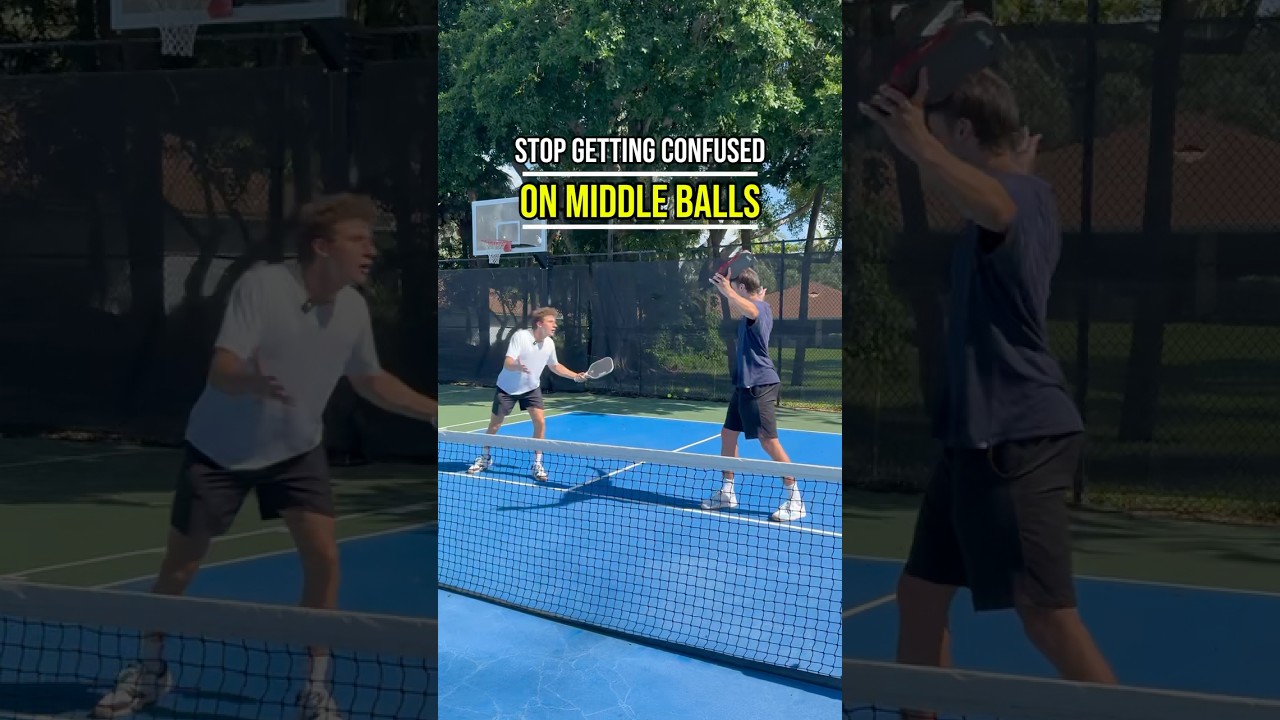
- Height of the ball on their paddle: If your opponent contacts the ball low—near or below the net tape—they must hit it upward to clear the net. This trajectory significantly increases the likelihood that the ball will sail long.
- Pace and swing speed: Observe the intensity of your opponent's stroke. A large, aggressive swing from close range is a strong indicator that the ball is leaving the court, whereas a controlled roll is more likely to stay in play.
- The type of shot: Be particularly wary of kitchen-line attacks hit off a bounce. These are prime candidates for out-balls because the attacker has very little margin for error.
- The player's tendencies: Not every opponent possesses the same skill set. Pay attention to whether your specific opponent has the ability to keep an attack in from various spots on the court, and adjust your decision-making based on their individual performance.
The core of this strategy lies in the 29-foot rule. Because the net remains 34 to 36 inches high regardless of where an attacker stands, a player at the kitchen line faces a much steeper challenge to keep a hard-hit ball in bounds compared to a player at the baseline. When you see an opponent attacking from the kitchen, especially off a low ball, the physics of the court are working in your favor. The best way to build the confidence to let these balls go is to practice the discipline of watching them land, which eventually proves to your brain that the ball was indeed heading out.