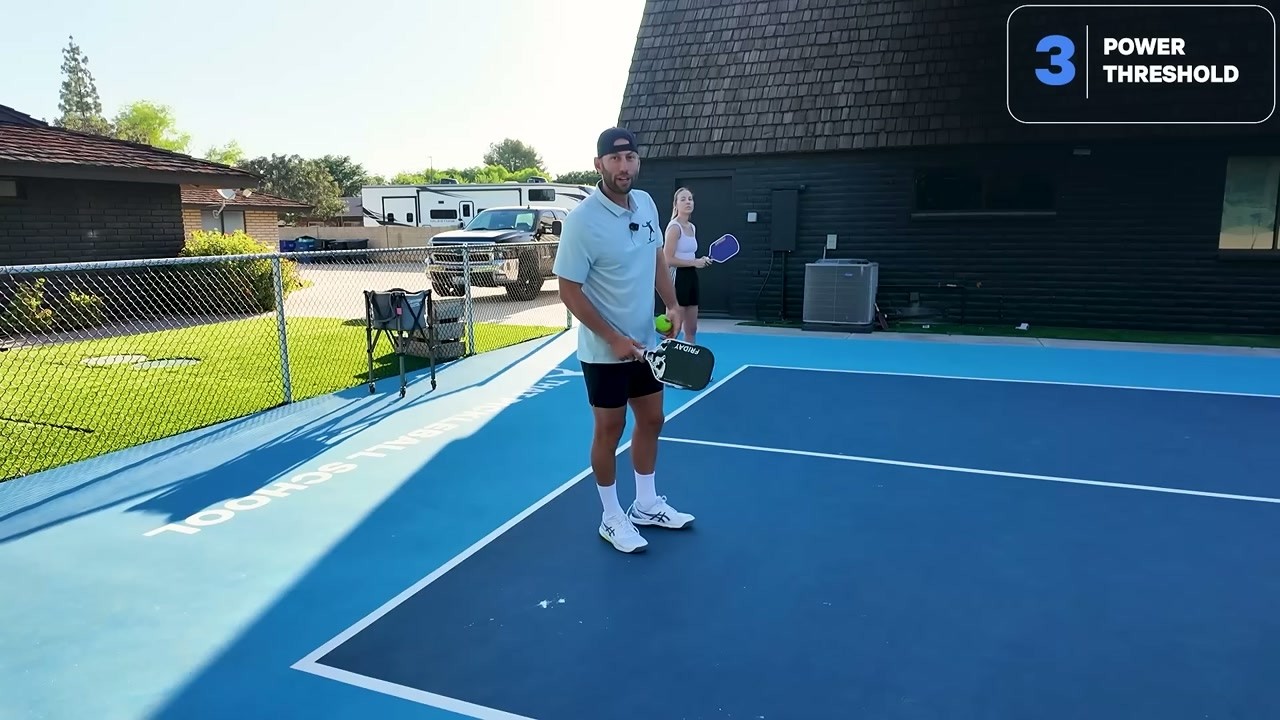
Developing the discipline to let out-balls go is one of the most effective ways to stop handing free points to your opponents. By utilizing specific visual gauges, you can move away from the instinct to swing at everything and start trusting your ability to identify shots that are destined to land beyond the baseline.
Five Gauges for Identifying Out-Balls
According to coaches CJ Johnson and Kelly from Better Pickleball, you should use these five indicators in tandem to decide when to put your paddle down and let a ball sail:
- Distance from the baseline: Understand the 29-foot rule. When your opponent attacks from the non-volley zone (kitchen), they only have 29 feet of court to work with compared to the 40 feet available when hitting from the baseline. The closer the attacker is to the net, the higher the probability that a hard shot will sail long.
- Height of the ball on their paddle: If your opponent makes contact with the ball low—near or below the net tape—they are forced to hit upward to clear the net. This trajectory makes it much more likely that the ball will travel too far and land out of bounds.
- Pace and swing speed: Observe the attacker's mechanics. A massive, aggressive swing from close range is a strong indicator that the ball will likely leave the court, whereas a controlled roll is more likely to stay in play.
- The shot they are attempting: Be particularly wary of kitchen-line attacks that occur off a bounce. These shots are prime candidates for landing long because the player is trying to generate speed from a position with very little margin for error.
- The player's tendencies: Not every opponent possesses the same skill set. Pay attention to your specific opponent’s ability to keep attacks in play from various positions and adjust your decision-making based on their individual track record.
The core logic behind these gauges is rooted in geometry and physics. Because the net remains a constant height (34 inches at the center and 36 inches at the sidelines), an attacker standing at the kitchen line must strike the ball with a steep upward angle to clear the net. When they combine that angle with high pace, the ball often lacks the downward trajectory needed to land within the 29 feet remaining on your side of the court. Conversely, when an opponent drives from the baseline, they have 40 feet of court depth, making their shots much more likely to land in; in those instances, you should remain ready to play the ball.
Ultimately, the best way to build confidence in your ability to call out-balls is through repetition. By intentionally letting balls go during practice, you can observe where they land and calibrate your internal gauges, eventually replacing your nervous instinct to swing with the calm decision to let the point end in your favor.