To stop scrambling on the court and start dictating the flow of your matches, you must move beyond individual shot selection and begin managing the three distinct momentum states of a rally. By recognizing whether you are in a neutral, advantage, or disadvantage state, you can make high-percentage decisions that keep you in points longer and lead to more consistent wins.
The Three Momentum States
According to the coaching team at PlayPickleball.com, understanding these three states is the primary differentiator between 5.0 players and the rest of the field. Here is how to identify and respond to each phase of a rally:
- Neutral: This occurs when all four players are established at the kitchen line with no team holding a clear edge. The goal here is patience. Many amateurs mistakenly view this as a passive state and try to force a winner, but the correct strategy is to remain balanced and wait for a genuine opportunity to shift the momentum.
- Advantage: You enter this state when your team applies pressure that disrupts the opponents' balance. This might be caused by a ball left high, a dink that forces an opponent off the line, or a well-timed speed-up. When you have the advantage, you are in the driver's seat and can look for opportunities to close out the point.
- Disadvantage: This is the state where you are stretched, off-balance, or scrambling. The most common mistake players make is trying to jump directly from disadvantage to advantage by hitting a low-percentage winner. Instead, your primary objective should be to return the ball safely to neutral.
When you are in a disadvantageous position, such as being pressured at the baseline, you should avoid "hero" shots. Instead, use defensive tools like a high ball, a 60-percent power drive, or a sky lob to survive the rally. Your priority is to reset the point to neutral so you can work your way forward to the kitchen line gradually.
While the general rule is to always return to neutral before attacking, there are two specific exceptions where you can move directly from disadvantage to advantage:
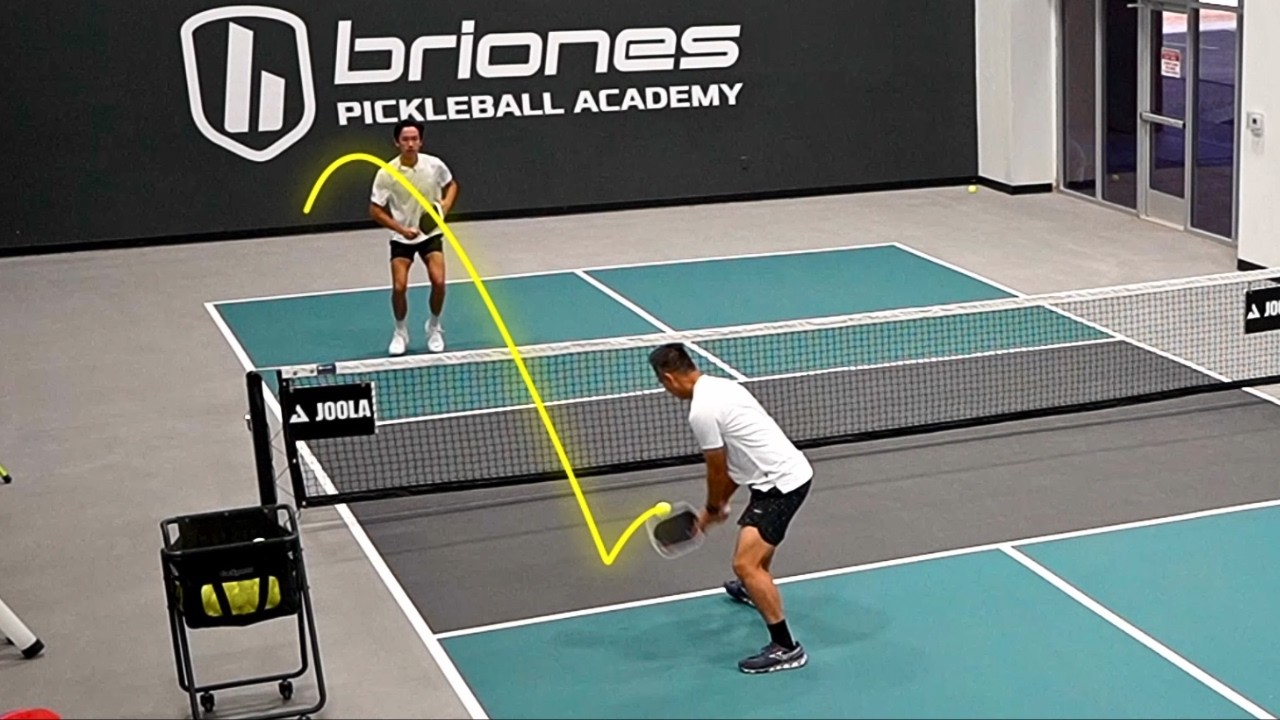
- Waist-high balls in the transition zone: If you are in the midcourt and receive a ball at waist level, it is an attackable shot. Resetting this ball is a missed opportunity; instead, hit down on it to seize the advantage immediately.
- Firefights at the kitchen line: During a fast-paced exchange, if you receive a ball at or above net level, you should attack it by angling your paddle downward. In these high-speed moments, waiting to return to neutral will likely result in losing the exchange.
The key to mastering this framework is ball recognition. Before every shot, ask yourself if you can hit down on the ball. If the answer is yes, attack; if not, prioritize a reset to get back to neutral.