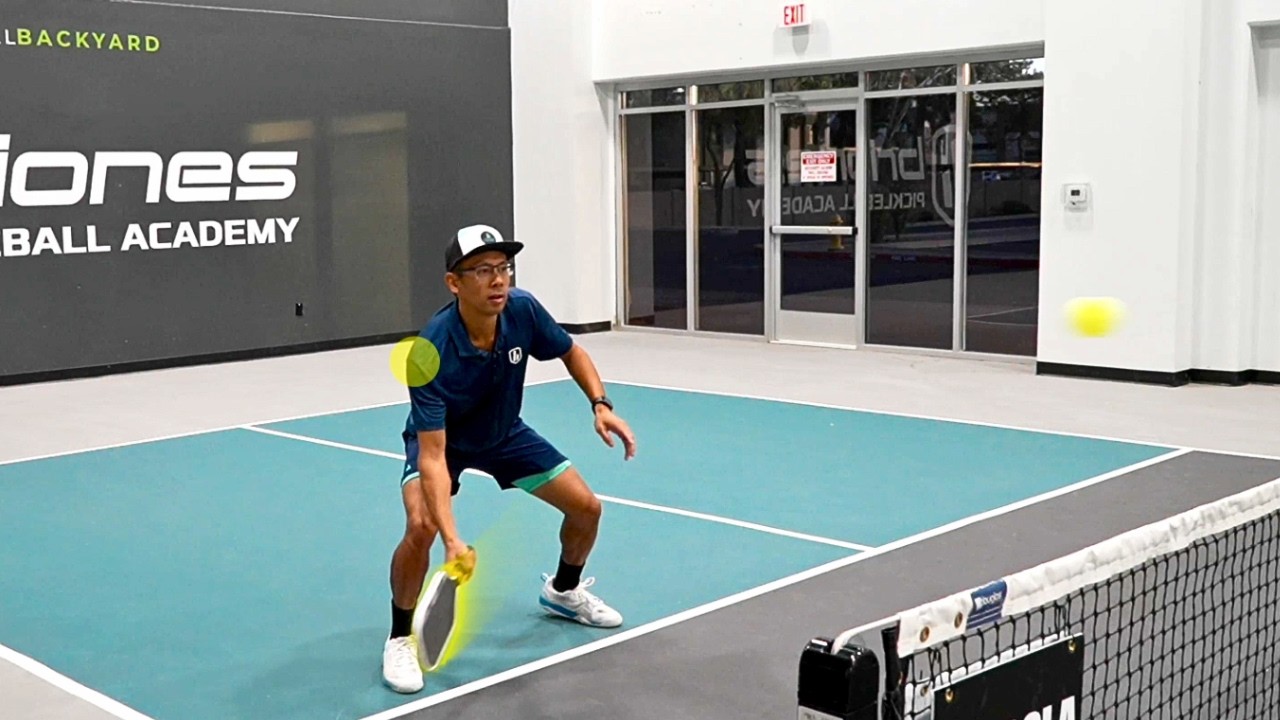
Many pickleball players struggle with inconsistent topspin because they rely on a wrist-heavy motion rather than utilizing the shoulder. By shifting the engine of your swing from the wrist to the shoulder, you can achieve greater accuracy, reduce the risk of overuse injuries, and produce more reliable spin on your dinks and volleys.
Retraining Your Topspin Mechanics
The primary issue with using the wrist to generate topspin is that it creates a tiny margin for error; any slight variation in timing or tension causes the ball to spray. According to insights from More Briones Pickleball, you must transition to a shoulder-led motion to stabilize your shots. Follow these steps to retrain your swing:
- Lock your wrist: Keep your wrist firm and stable throughout the entire swing. It should not move independently; instead, think of it as a rigid extension of your arm that remains passive while the rest of your body does the work.
- Initiate from the shoulder: Start your swing using your shoulder rotation and lift. Your elbow should follow the shoulder, with the wrist and paddle simply acting as passengers along for the ride.
- Maintain a low-to-high path: Ensure the paddle is moving upward through the contact zone. This upward trajectory is the mechanical secret to creating topspin, rather than relying on wrist speed.
- Follow through upward: Avoid pushing your follow-through outward toward the net, which results in a flat swing path. Instead, finish your stroke with the paddle at a higher position than where you made contact with the ball.
- Use a slower swing speed: While it may feel counterintuitive, slowing down your swing allows you to focus on the shoulder-led motion. This helps you confirm that your wrist is not sneaking back into the stroke, which is essential for building long-term consistency.
This technique is particularly vital for two specific shots where wrist-snapping often causes errors: the topspin crosscourt dink, where a wrist snap leads to popped-up or wide balls, and the swinging volley, where a lack of control often causes players to spray their attacks. By mastering the shoulder-driven, low-to-high swing path, you widen your margin for error and allow the angle of the paddle face to do the work, resulting in a more effective and reliable game.