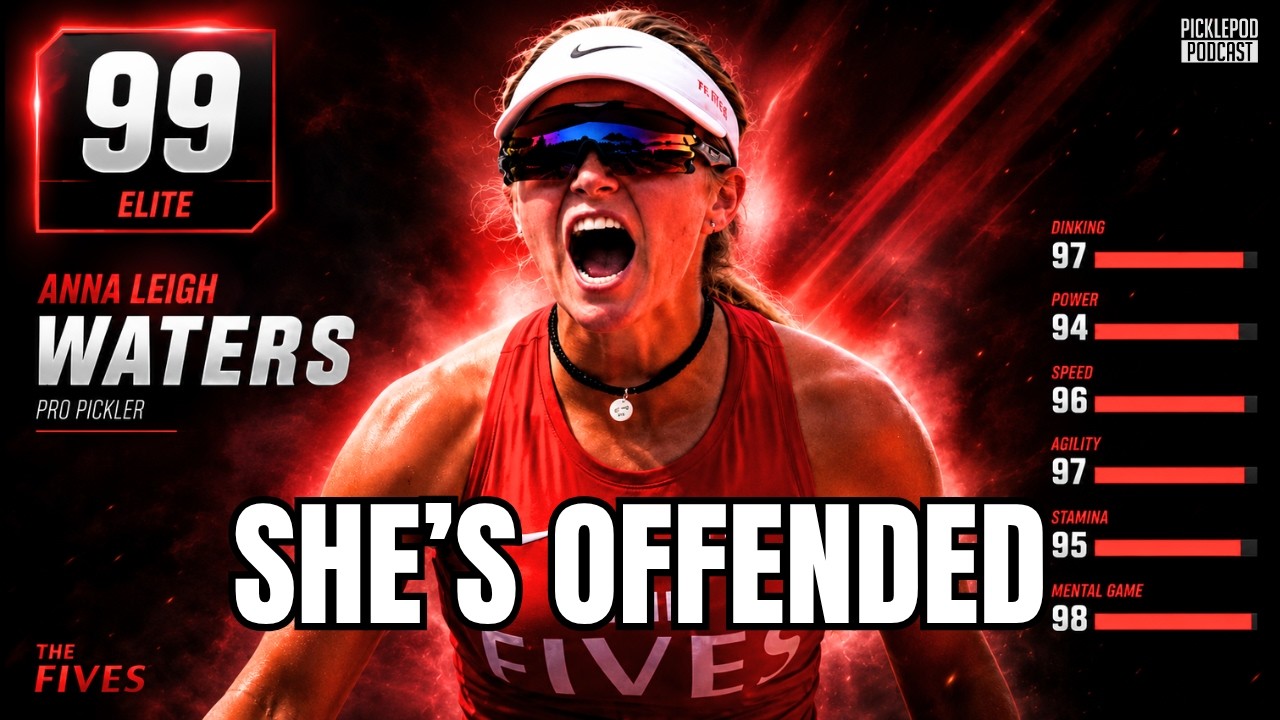
Even the world’s top-ranked pickleball player, Anna Leigh Waters, identifies specific areas for improvement in her game. In a recent appearance on the PicklePod podcast, Waters participated in a Madden-style 2K ratings breakdown, offering a candid look at the technical aspects of her play that she believes still require refinement.
Waters' Self-Assessment and Key Takeaways
While Waters holds a 99 overall rating—placing her in the same elite tier as Ben Johns—she remains critical of her own performance. Her self-assessment provides a blueprint for how players at any level should evaluate their own strengths and weaknesses. According to Waters, the following areas are where she sees room for growth or strategic adjustment:
- The Put-away Overhead: Rated at an 85 in the breakdown, Waters acknowledged this is a relative weakness compared to her world-class dinking and defensive skills. However, she noted that because her positioning is so precise, opponents rarely get the chance to force her into difficult overhead situations, effectively neutralizing the liability.
- The Flick: Waters identified this as a shot she rarely utilizes. Rather than viewing this as a technical failure, she treats it as a strategic choice; by avoiding a shot she deems inconsistent, she prevents unforced errors and maintains high-percentage play.
- The Serve: Waters admitted that while she hits her serve with significant power, she often struggles with depth. She noted that she is currently working to integrate more spin and length into her serve without sacrificing consistency. She also highlighted that her frequent experimentation with different techniques suggests she has not yet settled on a single, perfectly repeatable motion.
For recreational players, the lesson is not to hunt for these "weaknesses" in a match against a pro, but to apply the same analytical framework to their own development. Waters’ approach demonstrates that elite performance is less about having zero flaws and more about understanding which shots to avoid and which technical elements—like serve depth—require consistent practice.
To audit your own game, the article suggests running a self-checklist across six core categories:
- Attacks: Are you successfully finishing balls that should be put away?
- Defense: Can you effectively reset the ball under pressure without popping it up?
- Dinking: Are you dictating the pace at the kitchen line, or are you merely surviving the exchange?
- Groundstrokes: Is your third shot consistent enough to be a reliable foundation for your rallies?
- Serve: Does your serve create genuine pressure, or does it simply serve as a way to start the point?
- Return: Are you neutralizing your opponent's serve, or are you giving away free points?
By identifying these categories, players can move beyond casual observation and begin to build a structured, professional-style approach to their own improvement.