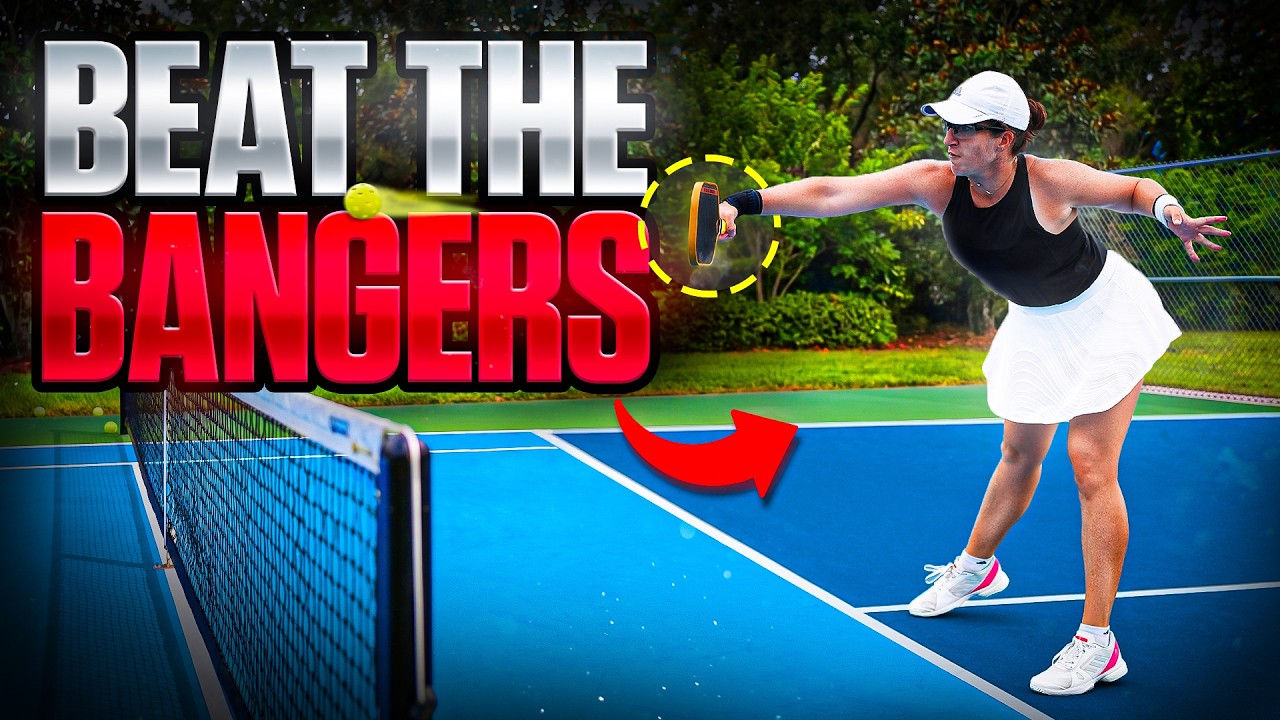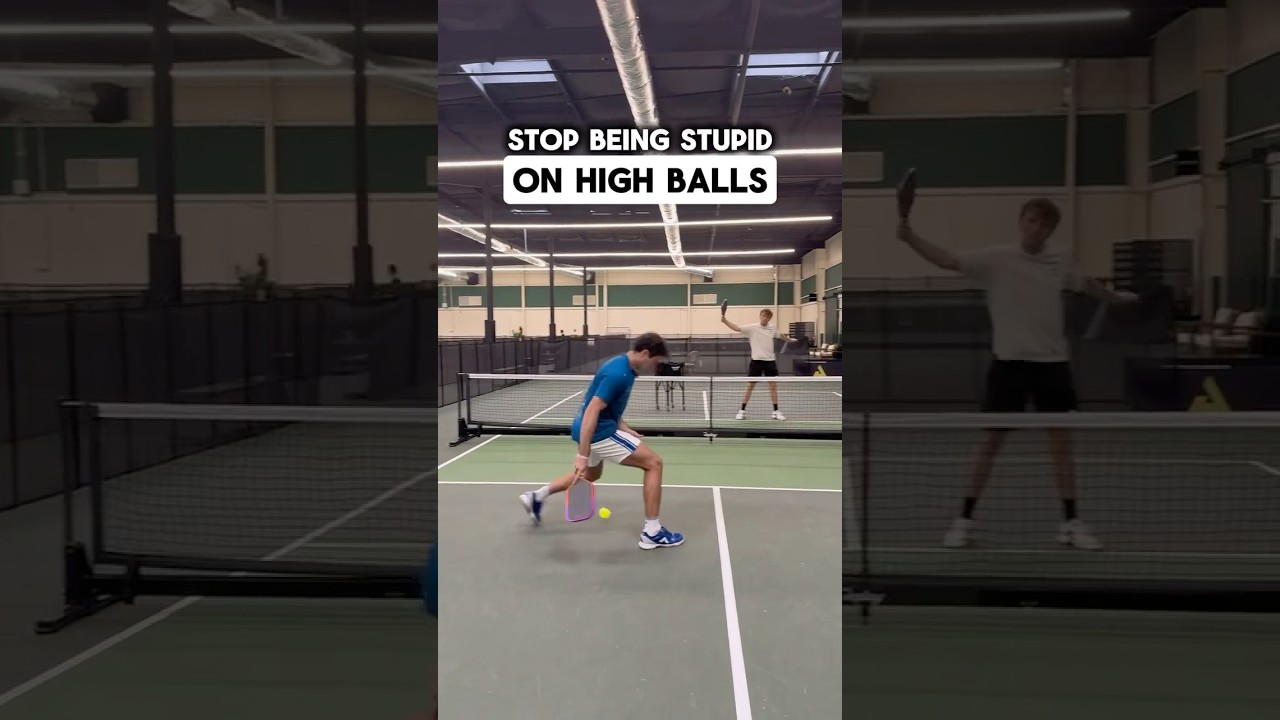
Pickleball players often struggle with high balls, and their instinct to read their opponent's paddle angle and react accordingly can lead to mistakes. However, there is a simple yet effective rule that can help players position themselves correctly every time, known as the "high ball rule" or "find the backhand" approach.
This approach, shared by Richard Livornese on YouTube, involves taking a deliberate step toward the middle of the court and preparing for a backhand return whenever a high ball is hit. This default position allows players to cover the highest-percentage target and still have enough court awareness to chase down a ball hit to their forehand side if needed. To execute this move, players should follow a specific sequence of steps:
- Recognize the pickleball high ball early: The moment the ball rises above net height on the opponent's side, take action.
- Take one step toward the middle of the court: A deliberate shift of weight and feet toward the center, not a big shuffle.
- Set your backhand grip: Get your paddle into backhand position before the ball crosses the net, whether you prefer one hand or two.
- Stay loaded and ready to move wide: Keep knees slightly bent to push off toward the forehand side if the ball goes that direction.
- Trust the position: Commit to the backhand until you absolutely have to move, avoiding second-guessing and drifting back toward the forehand side.
Why the Backhand Side is the Right Default
The backhand side is often the more defensible side when receiving a hard or sharp ball, especially at the kitchen line where there is little time to set up a full forehand swing. A two-handed backhand provides a stable, compact contact point that handles pace well. Additionally, court geometry plays a role, as a ball hit sharply to the forehand side from the middle of the net has to travel more distance, giving the player more time to react and run it down. By positioning themselves near the center and preparing for a backhand, players can neutralize the threat of a hard shot to their backhand side.
While this approach may not guarantee that players will always get to the wide forehand, it does allow them to make a deliberate choice to protect the highest-percentage target and accept the small risk on the wide side. This is a smarter gamble, as players are no longer giving up both sides unpredictably. Even when the opponent hits wide, players still have a chance to run it down and stay in the point.