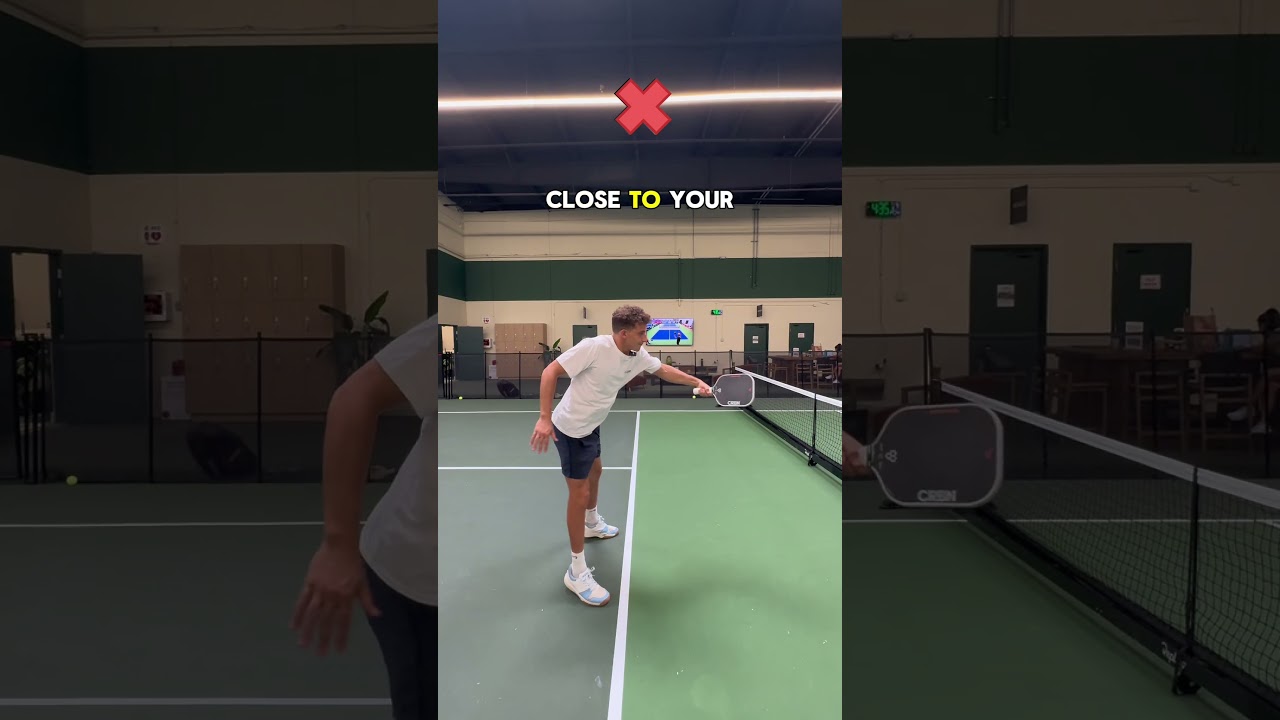
If you find yourself struggling to handle hard drives at the kitchen line, the issue is likely your timing rather than your hand speed. By adjusting your ready position to be proactive rather than reactive, you can neutralize pace and turn defensive situations into controlled returns.
Mastering the Forward Ready Position
Most players make the mistake of keeping their paddle close to their body, forcing them to reach out only after the ball is already in flight. This creates a timing gap that leads to jammed swings or unforced errors. According to insights from Tanner Tomassi, the secret to defending against aggressive "bangers" is to establish your paddle position before your opponent makes contact.
To effectively handle a hard drive, you must focus on the following three technical adjustments for your paddle placement:
- Height: Position your paddle face at chest-to-shoulder level. This allows you to easily redirect the ball downward into the kitchen rather than popping it up for your opponent.
- Distance from body: Extend your arm until it is nearly fully straight. Avoid locking your elbow; keep a slight bend to ensure you have enough flexibility to absorb the pace upon contact.
- Paddle angle: Maintain a slightly closed face, with the top of the paddle tilted forward. This angle is crucial for keeping your return low and preventing the ball from floating back to your opponent.
The goal is to eliminate the need for a large swing. By setting your paddle early, you can simply "bat" the ball down, using your opponent's own pace against them. This transition from a passive block to an active counter is a vital skill for players looking to level up their defensive game.
To execute this successfully, you must learn to read the visual cues that signal a drive is coming. Watch your opponent for these specific movements:
- Shoulder turn: Their shoulder rotates backward to prepare for a powerful swing.
- Elbow position: Their elbow drops low and behind their hip.
- Weight transfer: They step into the ball, shifting their weight forward.
- Paddle face: The paddle face opens slightly toward the back fence.
When you spot these triggers, push your paddle forward immediately. By training yourself to respond to the opponent's setup rather than the ball's flight, you remove the need for superhuman reflexes and replace them with superior anticipation and positioning.