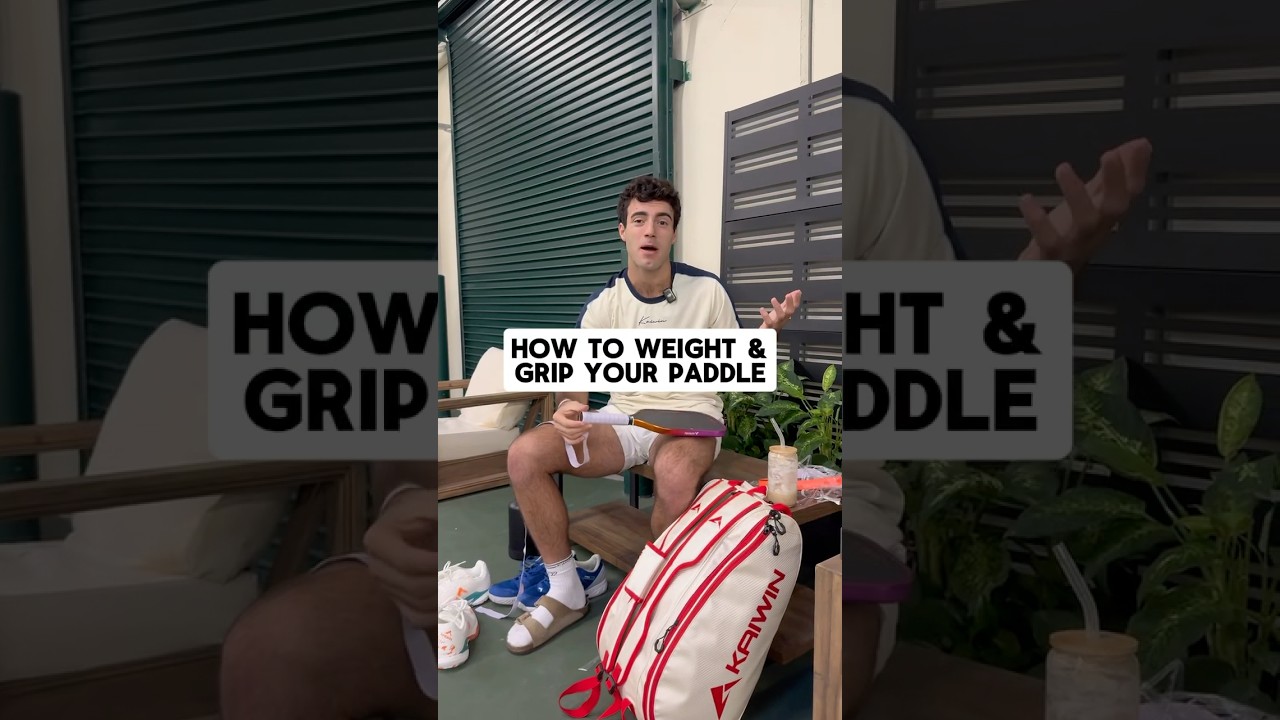
Most pickleball players overlook the importance of a standardized paddle setup, often resulting in inconsistent performance at the kitchen line and during delicate resets. By following a repeatable, data-driven customization process—as demonstrated by Richard Pickleball—you can ensure your paddle feels identical every time you step onto the court.
The Step-by-Step Customization Process
To achieve a professional-grade feel and eliminate the inconsistency of stock equipment, follow these specific steps to customize your paddle:
- Strip the Stock Grip: Always remove the original factory grip down to the bare handle. Starting from scratch provides a consistent baseline, ensuring your grip thickness remains identical every time you replace your overgrips, rather than layering on top of varying factory materials.
- Apply the First Overgrip Layer: Wrap your first layer tightly around the handle. This creates a firm, stable foundation that prevents the grip from shifting or twisting during high-intensity rallies.
- Apply the Second Overgrip Layer: Wrap this layer slightly looser than the first. This provides a cushioned, comfortable feel for your hand without compromising the control established by the firm base layer.
- Target a Specific Weight: Use a small scale to weigh your paddle and aim for a consistent target—Richard uses 85 grams as his benchmark. By weighing your gear, you move from guessing to precision, allowing you to replicate the exact feel across multiple paddles.
- Strategically Place Lead Tape: Avoid the common mistake of adding weight to the top of the paddle, which increases swing weight and slows down your hand speed. Instead, place lead tape lower on the paddle toward the handle. This placement provides three distinct advantages: it widens the effective sweet spot, increases stability on off-center hits by resisting twisting, and creates a balanced feel that prevents the paddle from feeling head-heavy during fast exchanges.
By treating your paddle setup as a precise, repeatable process rather than an afterthought, you gain better control and more reliable performance. Using a scale to track your weight distribution and maintaining a consistent grip layering technique ensures that your equipment supports your game rather than hindering it.