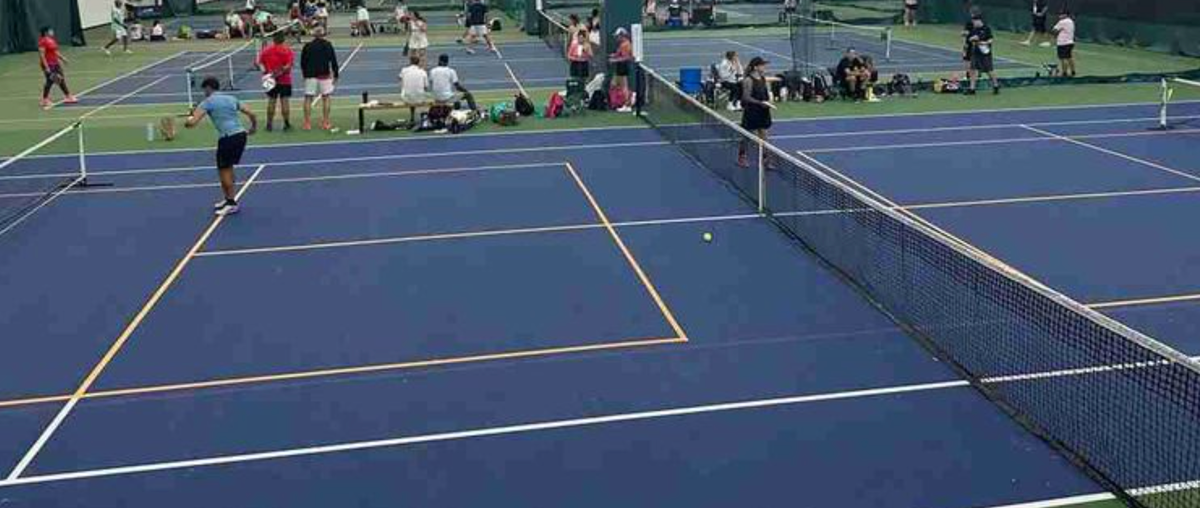
Pickleball court lines are the foundation of the game, defining every rule on the playing surface, and understanding them is crucial to avoiding disputes and improving gameplay. The pickleball court is a 44-foot by 20-foot playing surface with a set of lines that form a complete boundary and scoring system, each with a specific name and function tied directly to the rules.
The full set of lines includes the Baselines, which are the end lines at each end of the court; the Sidelines, which are the outer boundary lines running the length of the court; the Non-volley zone lines, also known as the kitchen line, which runs parallel to the net at exactly 7 feet on both sides; the Centerlines, which run from the kitchen line to the baseline, splitting each side into two service boxes; and The Net, which functions as the court's central divider. It's worth noting that the court dimensions remain the same for both singles and doubles, contrary to what many players assume.
Understanding Each Line
The Non-Volley Zone Line, or kitchen line, is where most arguments and faults occur, and it's essential to understand its rules. The line creates a zone called the non-volley zone (NVZ), or simply "the kitchen," where players cannot volley the ball while any part of their body is touching the kitchen or the kitchen line. However, during a rally, the kitchen line is in bounds for most shots, but during a serve, a ball that lands on the kitchen line is a fault.
The Baseline is the back boundary line of the court, running the full 20-foot width at each end, and it sits 22 feet from the net on both sides. A ball landing on the baseline is in, and the line is part of the court. The baseline is crucial for serve placement and return position, and understanding its exact position helps players decide when to stay back versus getting to the net.
The Centerline divides each side of the court into two equal service boxes and runs from the kitchen line to the baseline. The serve must land in the cross-court service box, diagonally opposite from where the server is standing. The centerline itself is in on a serve, and a serve landing on the centerline is good. Understanding where to return serve in pickleball starts with knowing exactly where the serve can and can't land.
In terms of whether pickleball court lines are in or out, all lines are in during a rally, and if any part of the ball contacts a line, the ball is considered to have landed in bounds. The only exception is the non-volley zone line on a serve, which creates a fault. According to USA Pickleball's official 2025 rulebook, a ball contacting the playing surface outside the applicable lines is out, and anything touching a line is in.
Here are the key points to remember about pickleball court lines:
- Baselines: The end lines at each end of the court, 22 feet from the net, and part of the court.
- Sidelines: The outer boundary lines running the length of the court.
- Non-volley zone lines (kitchen line): Runs parallel to the net at exactly 7 feet on both sides, and players cannot volley the ball while any part of their body is touching the kitchen or the kitchen line.
- Centerlines: Divides each side of the court into two equal service boxes, and the serve must land in the cross-court service box.
- The Net: Functions as the court's central divider.