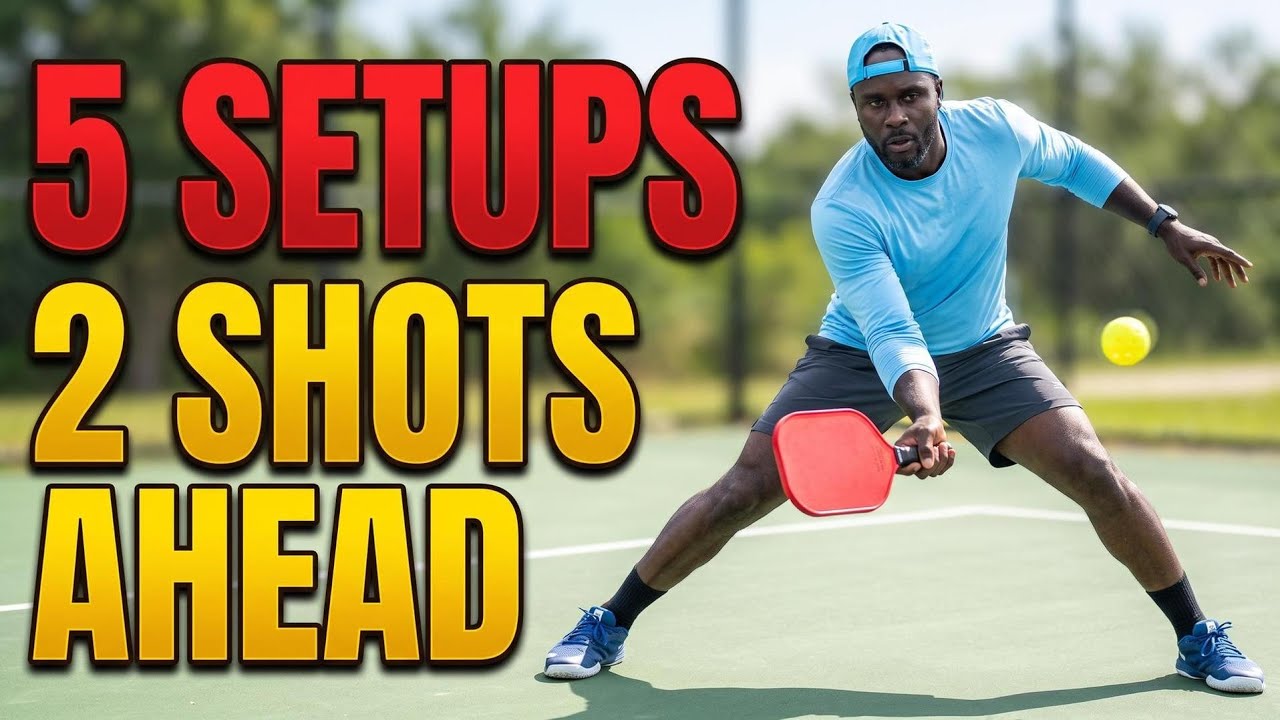
Pickleball players often wait for the perfect ball to attack, but this approach can lead to missed opportunities and lost rallies. To take their game to the next level, players can learn to build their own openings using two-shot combinations, which involve a setup shot and a finish shot that work together to create an advantage.
These combinations, as outlined by Cliff Pickleball on YouTube, require players to think one shot ahead and create the opening for their second ball to finish. The key is to focus on the shot before the attack, rather than just the attack itself, and to use the setup shot to create a specific response from the opponent that can be exploited by the second shot.
Five Essential Two-Shot Combinations
The following five combinations can help players stop reacting and start constructing their attacks:
- Wide Attack, Attack the Middle: This combination starts with a cross-court dig aimed at the opponent's outside foot, with the goal of pulling them wide and creating an opening in the middle. The second shot attacks through the middle, taking advantage of the opponent's rotated body and paddle.
- Body Speed Up, Finish Behind: This combination involves attacking the paddle side hip or shoulder on the first ball, creating a predictable counter from the opponent. The second shot directs the ball behind the player, toward the sideline they just vacated, using the opponent's rotation and lean to create an opening.
- Deep Return, Soft Fourth Shot Block: This combination starts with a deep return, forcing the opponent to hit from further back in the court. The second shot blocks the fourth shot softly into the kitchen, making the opponent cover ground and hit their next ball while their feet are still moving, compounding the difficulty of the shot.
- Middle Dink, Outside Speed Up: This combination uses a middle dink to create hesitation between both opponents and gather information about their movement and response. The second shot attacks the outside, taking advantage of the exposed side and the opponent's rotation and movement.
- Third Shot Drop, Fifth Shot Attack: Although not fully explained in the provided text, this combination is mentioned as another example of a two-shot combination that can be used to create an advantage and attack the opponent.
By mastering these two-shot combinations, players can improve their game and reach a higher level of play. As world-ranked pro Roscoe Bellamy notes, the pickleball combo is no longer optional at the highest levels of the game, and players who can execute these combinations effectively will have a significant advantage over their opponents.