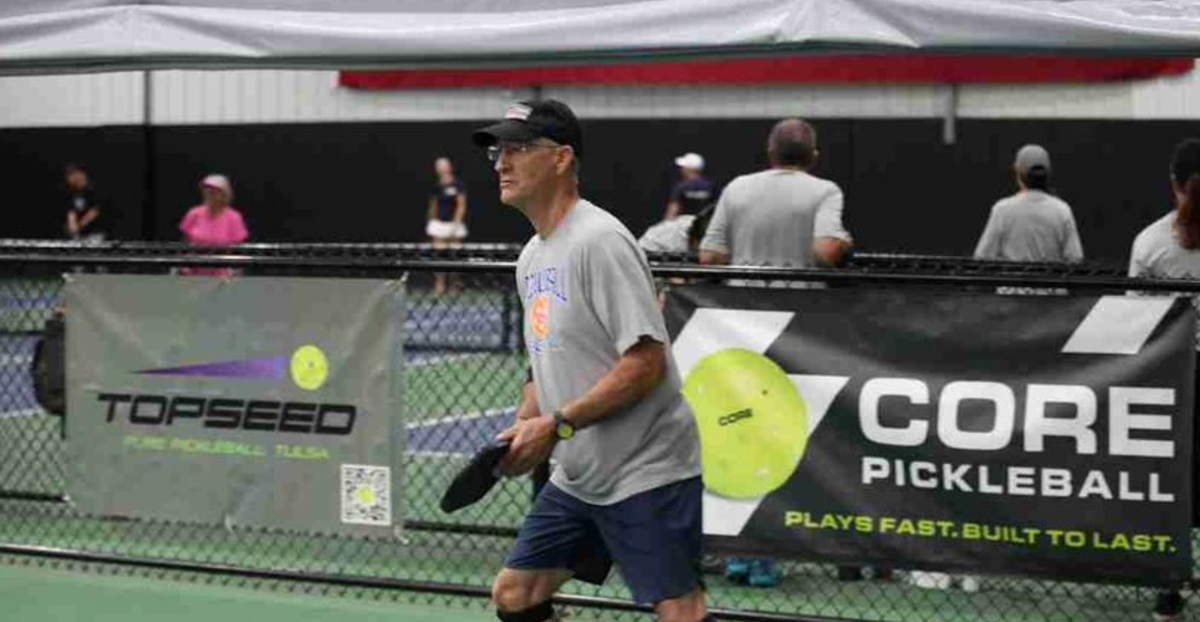
For senior pickleball players, prioritizing core strength is the most effective way to prevent falls and maintain stability during unpredictable court movements. Rather than focusing on aesthetics, players should view core training as a vital mechanism for controlling the trunk over the hips and legs to ensure they stay upright when reaching for wide shots or backpedaling.
Understanding the Core and Why It Matters
In sports medicine, the core is not merely about the abdominal muscles; it is the central hub of the kinetic chain, encompassing the glutes, hip abductors and rotators, erector spinae, deep abdominals, pelvic floor, and diaphragm. This complex is responsible for regulating torque and transferring force from the torso to the limbs. For seniors, this is critical because data indicates that falls are the primary cause of pickleball-related injuries, with players aged 60 to 79 accounting for roughly 73% of emergency department visits. Strengthening these lateral and posterior structures is essential for maintaining balance during the multi-directional movements required in a match.
Research highlights that hip strength is a key component of this stability. Specifically, studies show that hip abduction strength is negatively correlated with change-of-direction time, meaning that stronger abductors allow for faster, more controlled lateral movements. Relying on static exercises like planks is often insufficient because they do not mimic the dynamic, reactive nature of a live point. Instead, training should focus on the frontal plane—the same plane used when covering the middle of the court or shifting positions mid-rally.
While evidence is still evolving, a 12-week study involving seniors (mean age 66) demonstrated the potential benefits of a comprehensive training program. The group that engaged in a mix of resistance, core, dynamic balance, and dual-task training saw the following results:
- Improved Change-of-Direction Time: Participants in the trained group improved their agility by 0.7 seconds compared to the control group.
- Reduced Fear of Falling: The trained group reported a statistically significant decrease in their fear of falling during play.
- Lower Fall Incidence: At a five-month follow-up, only 25% of the trained group reported falling during play, compared to 44% of the control group.
Ultimately, senior players should move beyond simple, single-plane movements. Because pickleball is a game of explosive pushes and lateral shifts, training must incorporate multi-directional exercises that challenge the body to maintain stability under the pressure of a live ball. By treating balance as a trainable skill rather than a fixed trait, seniors can significantly improve their court performance and longevity.