
4 min read · 835 words · 4 images
You are standing at the net. Your opponent sends a high, floating ball your way. The temptation to reach forward and smash it into the dirt is intense, but your foot is hovering dangerously close to the line. Welcome to the most debated area on the court: the Non-Volley Zone, or the kitchen.
Understanding pickleball kitchen rules is the first step toward moving from a recreational player to a strategic one. The kitchen is a 7-foot deep zone on each side of the net, extending the full width of the court. As of 2026, the USA Pickleball Official Rulebook governs these regulations, ensuring that players cannot simply stand at the net and turn the game into a slap-fight.
The Core Rules of the NVZ
The fundamental rule is simple: you cannot volley the ball while any part of your body, clothing, or anything you are carrying—including your paddle—touches the kitchen or its lines. A volley is defined as any shot hit in the air before the ball bounces. Because the lines bordering the kitchen are considered part of the kitchen, even a toe touching that paint while you strike a volley is a fault.
The Momentum Rule

It isn't just about where you are when you hit the ball; it is about where you end up. If your momentum from a volley carries you into the kitchen, it is a fault, even if you made contact with the ball outside the zone. The rally is not over until you have regained your balance and stopped your momentum; stepping into the kitchen during this recovery is a fault. While the rule says momentum must be stopped, there is no specific time limit or objective measurement for when a player is considered to have regained balance, which occasionally leads to subjective officiating in casual play.
Common Misconceptions

Many players mistakenly believe they cannot enter the kitchen unless the ball has bounced. In reality, you are allowed to enter the kitchen at any time, provided you are not volleying. You can walk into the kitchen to retrieve a ball or hit a groundstroke. The restriction only applies to the volley.
- 1 The ball bounces in the kitchen.
- 2 You step into the kitchen to hit the ball after the bounce.
- 3 You hit the ball back over the net.
- 4 You exit the kitchen safely.
Another point of confusion involves your partner. A fault is only called on the player who makes contact with the ball; your partner's position in the kitchen does not affect your shot. Whether you are playing in a league or outfitting a clinic with gear like a Custom Carbon Fiber Pickleball Paddle, the rules remain the same for everyone.
Strategic Play and the "Erne"
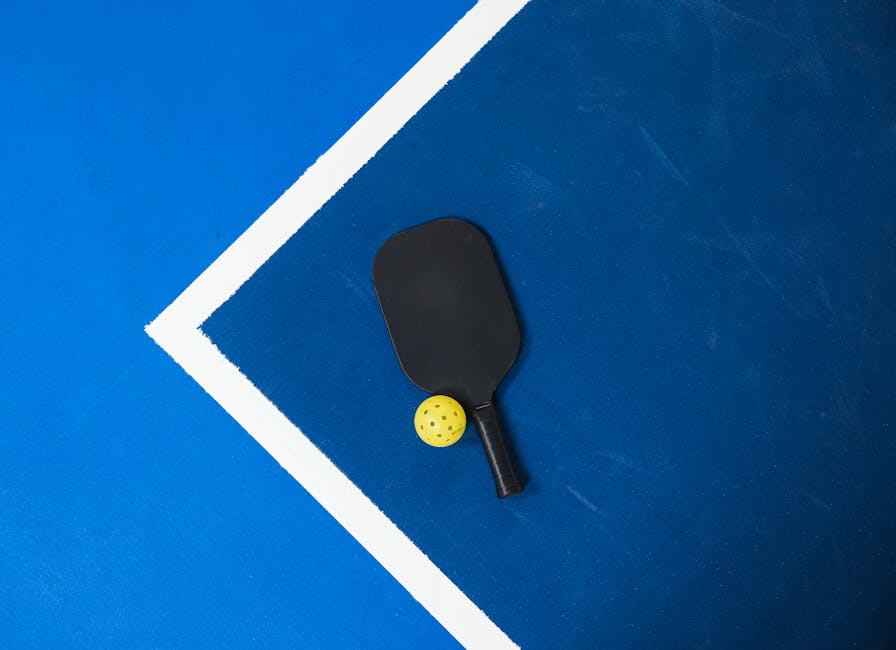
The kitchen exists to encourage strategic rallies rather than overhead smashes. Players utilize "dinks"—soft, controlled shots—to lure opponents to the net and create openings. If you want to bypass these restrictions, some players use an "Erne," which is a specialized, aggressive shot where a player jumps or runs around the kitchen to hit a ball. While the exact origin of the term "kitchen" remains unconfirmed, it is widely believed to have been adopted from shuffleboard, where a penalty area is similarly named.
Mastering these boundaries transforms your game from simple hitting into a nuanced contest of positioning. Keep your feet set, watch your momentum, and remember that the kitchen is there to make the game better, not to frustrate you.