Pickleball players often struggle with controlling their shots, and the issue usually stems from two fundamental aspects: grip and paddle angle. By adjusting these elements, players can significantly improve their shot control, making it less about talent and swing speed, and more about technique and mechanics.
The problem of shot control is not uncommon, especially among recreational players with a rating of 3.0 to 3.5. It can be frustrating to watch a routine dink sail past the baseline, but the solution lies in understanding and correcting the grip and paddle angle. Research has shown that paddle face angle at contact is a stronger predictor of shot accuracy than swing velocity, emphasizing the importance of a smarter angle over a faster arm.
Key Factors Affecting Shot Control
There are several key factors that affect shot control, including grip pressure, paddle angle, and paddle prep. A grip that is too tight or too western can make it difficult to achieve a consistent paddle angle, while a paddle face that is too open or too closed can result in shots that sail long or into the net. To achieve better shot control, players should focus on developing a neutral grip and paddle angle, with a slight upward tilt on soft shots.
Here are some specific tips to improve shot control:
- Grip Pressure: Grip pressure should be firm enough to prevent twist on contact, but loose enough to allow the wrist to absorb pace. A grip pressure of around 4 or 5 on a 10-point scale is ideal, and players can check their grip pressure by paying attention to forearm fatigue.
- Paddle Angle: The paddle angle should be neutral, with a slight upward tilt on soft shots. This angle can be adjusted depending on the type of shot being played, with dinks requiring a slightly open face and third shot drops requiring a slightly more open face and a longer, slower path.
- Paddle Prep: Paddle prep is critical in setting the paddle angle, and players should focus on prepping the paddle face at the angle they want the ball to leave on, before starting their forward motion.
Additionally, understanding how paddle angle changes shot by shot can help players improve their control. For example:
- Dinks: require a slightly open face with a soft, upward brushing motion
- Third Shot Drops: require a slightly more open face and a longer, slower path
- Drives: require a more neutral face, sometimes slightly closed depending on the target
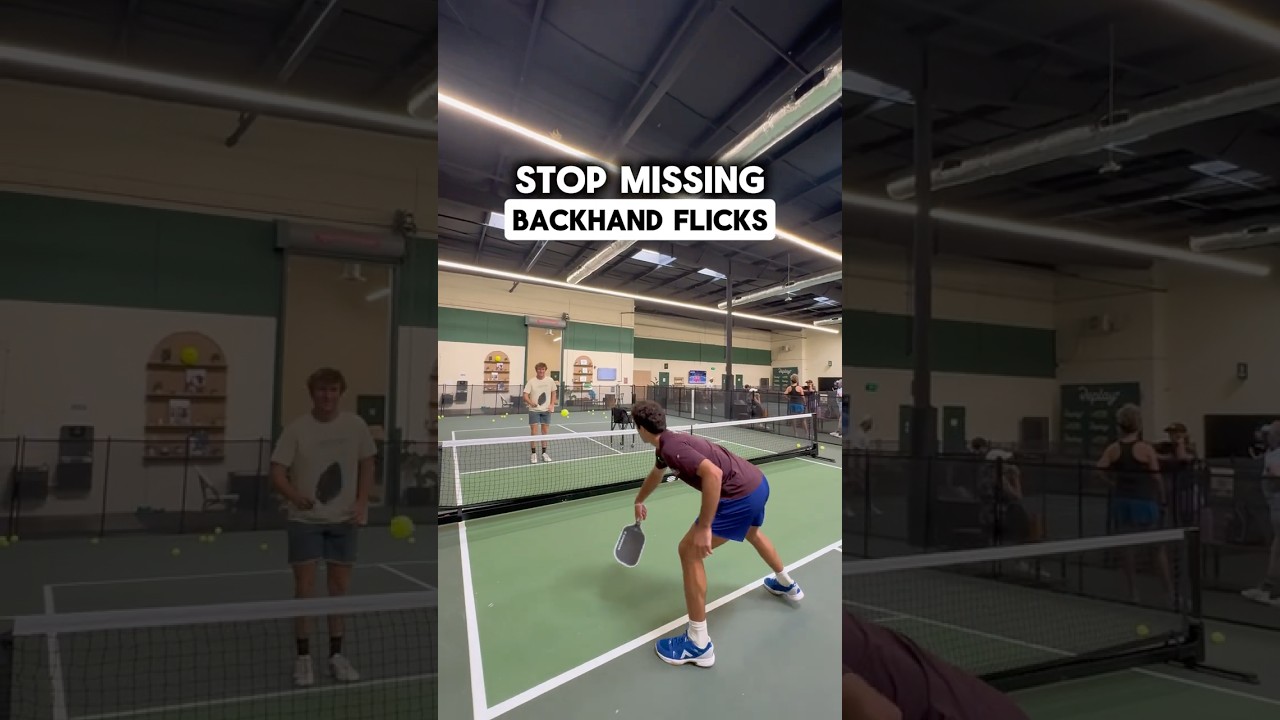
- Backhands: require a quiet wrist and a more neutral face to avoid rolling the face open
By focusing on these key factors and adjusting their grip and paddle angle accordingly, players can improve their shot control and take their game to the next level.