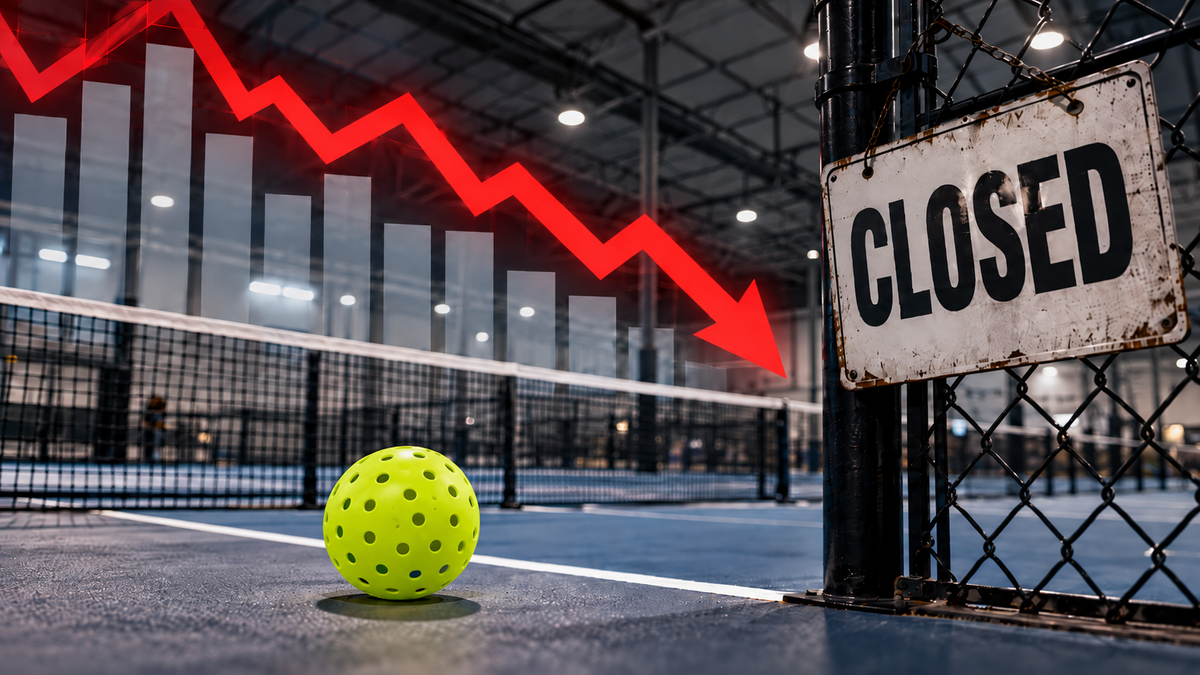
The recent wave of pickleball club closures is not a result of waning player interest, but rather the consequence of aggressive expansion, unsustainable lease agreements, and flawed business models. While the sport continues to grow, industry consultant West Shaw explains that the "gold rush" mentality of 2023 led many operators to sign high-stakes leases that their facilities simply cannot support.
The Economics of Club Failure
The current crisis stems from a disconnect between real estate valuation and the operational reality of a new, unproven industry. Because pickleball is a stubbornly local sport, many national franchise models failed to account for the specific needs of different markets. Furthermore, inexperienced operators often overpaid for commercial real estate, competing against established national retailers for limited, high-quality spaces. To understand why these businesses are struggling, it is essential to look at the specific factors driving these closures:
- The Cap Rate Trap: Investors use cap rates to price risk. A national tenant like Chick-fil-A commands a low cap rate (4.2–4.5%), making a building worth $14 million. Because a new pickleball club is considered a high-risk tenant, investors demand an 8–10% cap rate, which slashes the building's value to $6–7.5 million. Despite this, many operators signed leases at premium prices, effectively paying more than a national retailer for the same space.
- The "Gold Rush" Expansion: In 2023, the industry saw a sudden surge of franchise concepts with little operational experience. Many brands expanded rapidly without ever having operated a successful club outside of their home market, leading to a race to build that outpaced the industry's actual maturity.
- Lack of Operational Expertise: Many early investors were sold a "passive income" dream, assuming they could simply hire a general manager to run the club. However, because the industry was so young, there was no established bench of professional GMs or experienced pickleball staff to hire, leading to poor management.
- The Revenue-per-Court Disparity: Data from Johns Design Consulting shows that smaller facilities (10 courts or fewer) generate approximately $8,000 per court monthly, while larger facilities (more than 10 courts) generate only $5,600. Many large venues were built with the mistaken assumption that they would be the sole provider in their region.
- Fixed Rent Burdens: In the pickleball business, rent is the primary "cost of goods," and it is fixed. Clubs that signed leases on the higher end of the spectrum—sometimes reaching $100,000 per month—face a break-even point exceeding $1 million annually, making it nearly impossible to maintain profitability regardless of player demand.
Ultimately, the data suggests that player demand remains robust, as revenue figures have stayed consistent over the past year. The failure of these clubs is not a failure of the sport, but a failure of the business math behind the walls. In an over-built market, successful clubs are those that prioritize community over raw square footage.