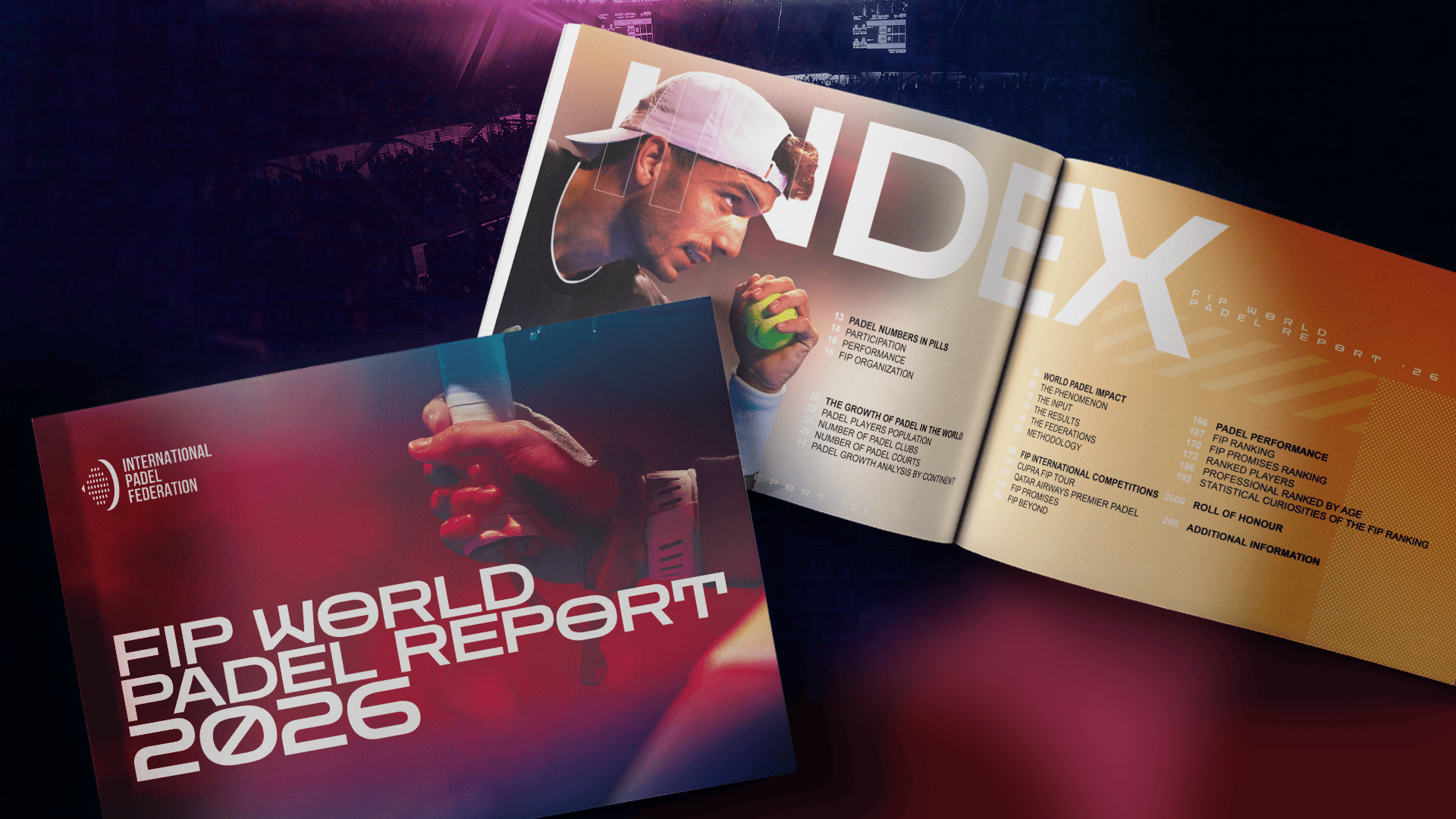
The latest FIP World Padel Report confirms that the sport is maintaining its rapid global trajectory, now boasting 40 million players and an average of 40 new courts constructed every single day. This third annual study from the sport's governing body provides a comprehensive look at the industry's expansion, highlighting both the social phenomenon of the amateur game and the growing economic footprint of professional padel.
Key Statistical Highlights and Economic Impact
The report offers a granular look at the state of the sport, detailing the infrastructure and demographic shifts that define the current padel landscape. According to the data, the sport has reached 191 countries and territories, marking an increase of 21 over the previous year.
- Player Demographics: The global participation split is currently 53% men and 47% women.
- Infrastructure Growth: There are now 91,234 courts worldwide, representing an increase of 14,000 courts in just one year.
- Club Expansion: The number of padel clubs has risen to 28,497, a growth of 3,890 clubs since the last report.
- Tournament Proliferation: The sport is seeing a significant rise in competitive events, with 434 FIP tournaments confirmed across 62 countries for 2026.
- Economic Output: A new "World Padel Impact" study, conducted with OpenEconomics, reveals that the industry generates €13.07 billion in economic output and supports over 235,000 jobs.
- Annual Expenditure: The global padel industry accounts for €6.84 billion in annual spending, encompassing court rentals, facility construction, technical equipment, and tournament operations.
The report also introduces a dedicated economic analysis that breaks down these figures by country, allowing users to explore specific data through an interactive mini-website. This includes detailed profiles for every FIP-affiliated federation, providing a clear picture of how padel contributes to local economies through investment, tourism, and job creation.
Beyond the numbers, the report details the evolution of the four primary FIP circuits: the CUPRA FIP Tour, Qatar Airways Premier Padel, FIP Promises, and FIP Beyond. Furthermore, it provides an in-depth look at the FIP Rankings, offering insights into the demographics of top-tier athletes, including their average age and birth years. FIP President Luigi Carraro emphasized that these findings demonstrate that padel has evolved into a robust ecosystem, with the amateur foundation providing the necessary support for the professional game to reach new international markets.