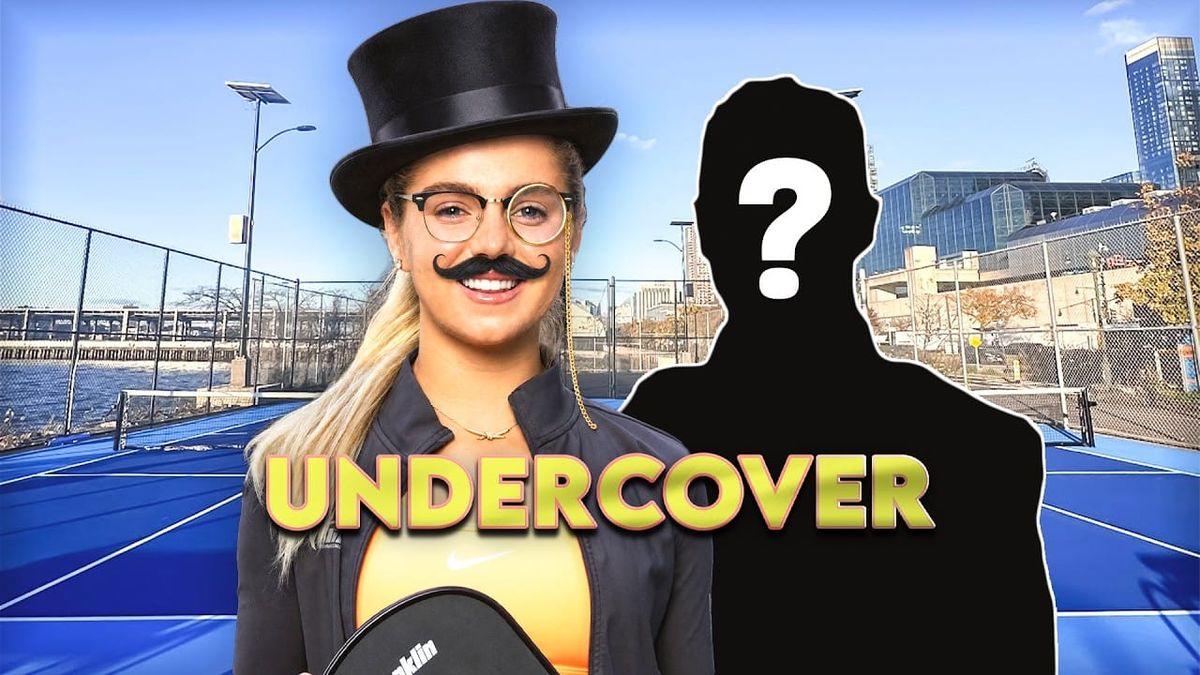
World-renowned pickleball star Anna Leigh Waters recently conducted a fascinating social experiment by going undercover at a public New York City court to see if she could pass as a recreational player. By switching to her non-dominant hand, using a fake name, and wearing sunglasses, Waters attempted to mask her identity, revealing exactly which traits reveal elite-level talent versus those that can be successfully disguised.
What Recreational Players Notice First
The experiment highlighted that even when a professional tries to blend in, specific cues often give them away to observant opponents. According to the observations from the court, here are the primary indicators recreational players use to size up the skill level of a new opponent:
- The paddle brand and shape: High-end, professional-grade equipment is often the first thing players notice. It signals that the individual is either a serious enthusiast or someone who has invested heavily in the sport, immediately drawing attention.
- The warm-up routine: How a player prepares before the first serve is a major tell. A deliberate, structured, and purposeful warm-up routine is a strong indicator of an experienced player.
- Grip and stance at the kitchen line: Even casual players can identify someone who looks comfortable and composed at the non-volley zone. This is one of the most visible signs of true court experience.
- Reaction to a speed-up: Most recreational players tend to flinch or swing late when faced with a fast ball. A pro’s reflexive, calm response to high-velocity shots is nearly impossible to fake, regardless of which hand they are using.
- Court awareness: This includes how a player positions themselves between shots, how they track their partner, and whether they instinctively shade the middle or crash the line.
Interestingly, Waters found that her equipment—specifically her pro-level paddle—was the first thing that tipped off other players, even before her footwork or technique did. While she successfully suppressed many of her professional instincts by playing left-handed, her high-level decision-making and game-reading abilities eventually leaked through once the rallies intensified.
The experiment serves as a reminder that the gap between skill levels, such as moving from a 3.5 to a 4.5 rating, is rarely about raw power. Instead, it is defined by the speed of one's reads and the quality of shot selection. While Waters struggled with the fine motor control and awkwardness of playing with her non-dominant hand, her brain continued to operate at a professional level, proving that elite decision-making is the hardest trait to hide on the court.