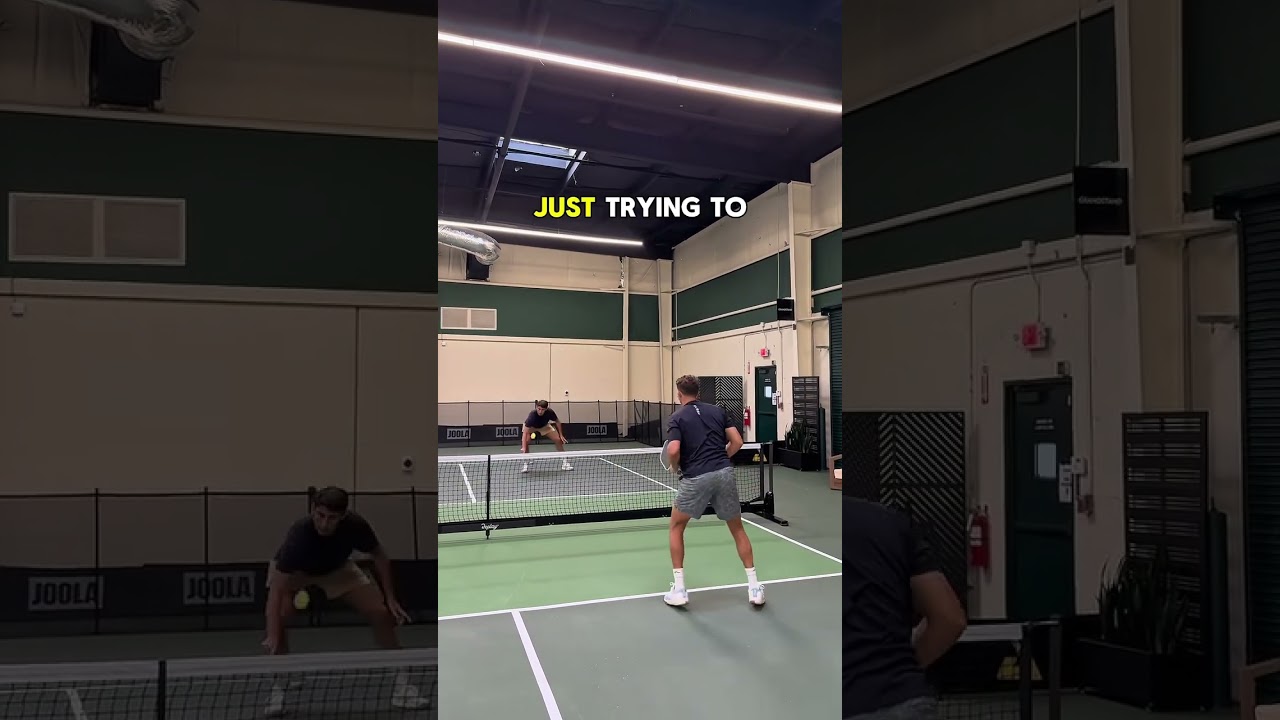
Many recreational players enter matches cold and uncalibrated, often resulting in slow starts and unforced errors. By following a structured, 60-second warm-up routine developed by Tanner Tomassi, players can transition from the kitchen to the baseline to properly activate their touch, footwork, and decision-making skills before the first point is ever played.
The 5-Step Professional Warm-Up Routine
A professional warm-up mirrors the progression of a point in reverse, starting with soft, touch-based shots at the net and moving outward to the baseline. This sequence ensures your hands and muscles are prepared for the most delicate shots before you introduce the power required for drives.
- Straight Ahead Dinking at the Kitchen: Begin at the non-volley zone line and dink directly to your partner. Focus on deliberate placement and light footwork rather than just rolling the ball back and forth. This step is essential for calibrating your touch, which is the foundation for every other shot in your game.
- Mid-Court Resets: One player moves to the transition zone (the mid-court area) while the other stays at the kitchen. The player in the transition zone should focus entirely on consistency and keeping the ball low. This helps rewire your instincts to remain patient and controlled in the "no man's land" area of the court.
- Third Shot Drops and Drives from the Baseline: Move to the baseline to practice your transition shots. It is vital to mix both drops and drives rather than focusing solely on drops; this forces you to practice the shot selection and decision-making required during live play.
- Third Shot Drops: While at the baseline, prioritize accuracy over power. Aim to land the ball in the kitchen with a soft arc, targeting the area directly in front of your net-playing partner.
- Third Shot Drives: When practicing drives, hit with clear intent. Aim for your partner's body or a specific target rather than just hitting the ball aimlessly, ensuring that your practice shots carry the same purpose they would in a competitive match.
The primary goal of this routine is calibration. Because every court environment—including wind, surface texture, and light—affects how the ball behaves, this sequence allows your brain to adjust your feel and timing before the score matters. By starting at the net and working backward, you ensure your arm is fully warmed up and your touch is sharp by the time you reach the baseline, preventing the common mistake of trying to "find your game" while already trailing in the first match.