Many recreational players lose their hard-earned advantage at the kitchen line by standing flat-footed after a quality dink, effectively waiting for the ball to come to them. By implementing a two-part ready position—focusing on proactive body weight and specific paddle orientation—you can transform defensive kitchen exchanges into aggressive, point-ending opportunities.
The Two-Part Ready Position
According to insights from tanner.pickleball, you must stop treating your post-dink moment as a period of rest. Instead, you should view the half-second after your shot as an active part of the attack. To apply this, focus on these two specific mechanical adjustments:
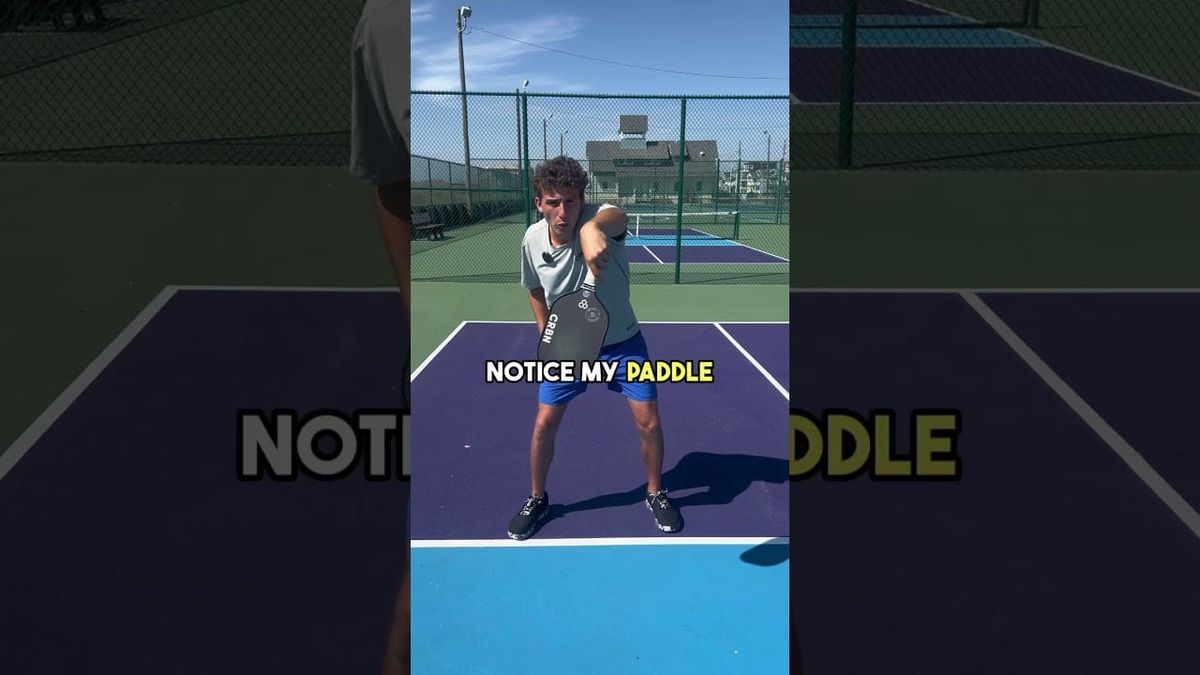
- Lean In and Reach: Immediately after hitting a pressure dink, shift your weight onto your front foot and extend your paddle arm toward the kitchen line. This anticipatory movement forces your opponent to deal with your presence near the net, often causing them to rush or mishit. To execute this correctly, ensure your weight is forward, your arm is extended rather than tucked, your eyes are tracking the ball, your feet remain grounded, and your body is angled toward the net. This is not a lunge, but a controlled shift that shortens the distance between you and the incoming ball.
- Drop Your Paddle Head: Most players keep their paddle face neutral or sideways, which leaves them vulnerable to spraying the ball left or right. Instead, point the tip of your paddle toward the ground so the face points upward. By dropping the paddle head, you eliminate sideways misses entirely. This makes your margin for error one-dimensional; if you miss, it will only go long. Since you are attacking from close range, a ball that goes slightly long is often difficult for opponents to handle, and this simplification makes your volleys significantly more consistent under pressure.
By combining a forward-leaning stance with a downward-facing paddle, you create a high-pressure environment that forces your opponents into mistakes. This approach turns the kitchen line into a place where you dictate the pace of the game rather than simply reacting to your opponent's shots.