Padel looks a bit like tennis at first glance, but the walls change everything. If you have ever watched a match and wondered why players are smashing the ball into the back glass on purpose, or why the serve always seems to bounce first, this guide covers it. By the end you will know enough to play your first game without slowing the rest of the court down.
 Padel is governed internationally by the FIP (International Padel Federation), and in the United States by the USPA. The rules below follow the FIP standard, which is what almost every club in the world plays by.
 The Court
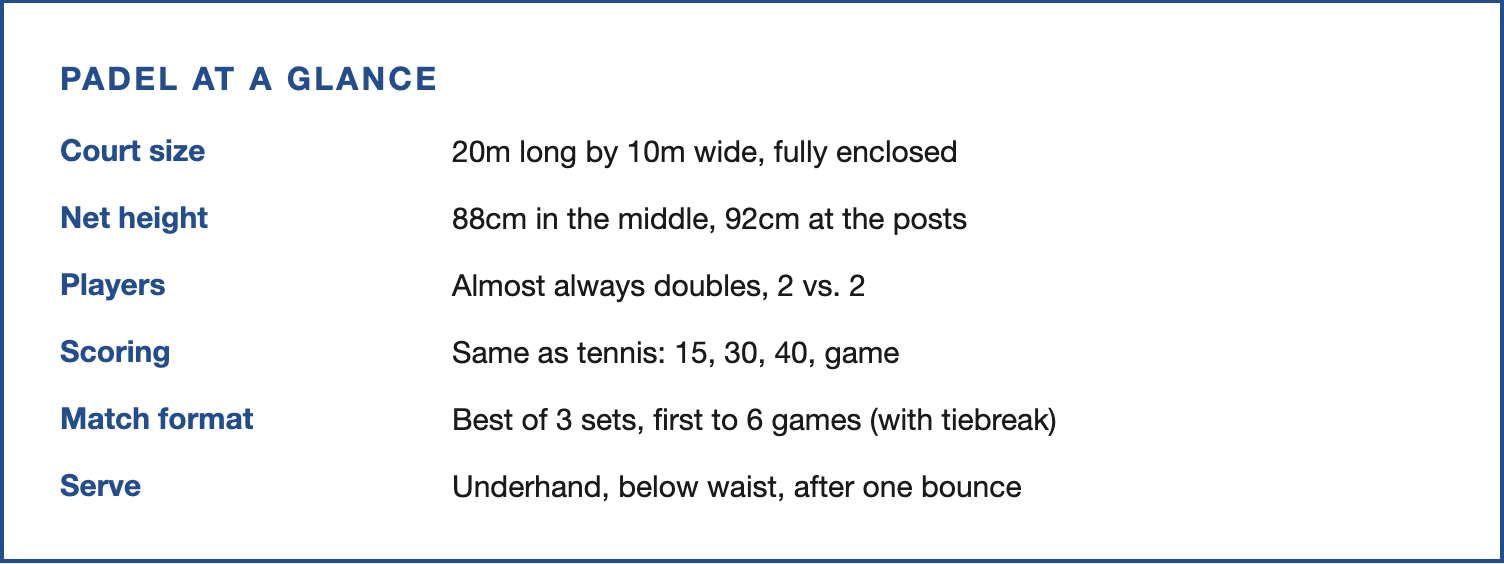
A padel court is 20 meters by 10 meters, surrounded by walls. The back walls and parts of the side walls are glass, three meters high. Above that, and along the rest of the sides, is metal mesh fencing. The court is split down the middle by a net, and each side has a service line 6.95 meters back from the net that creates two service boxes.
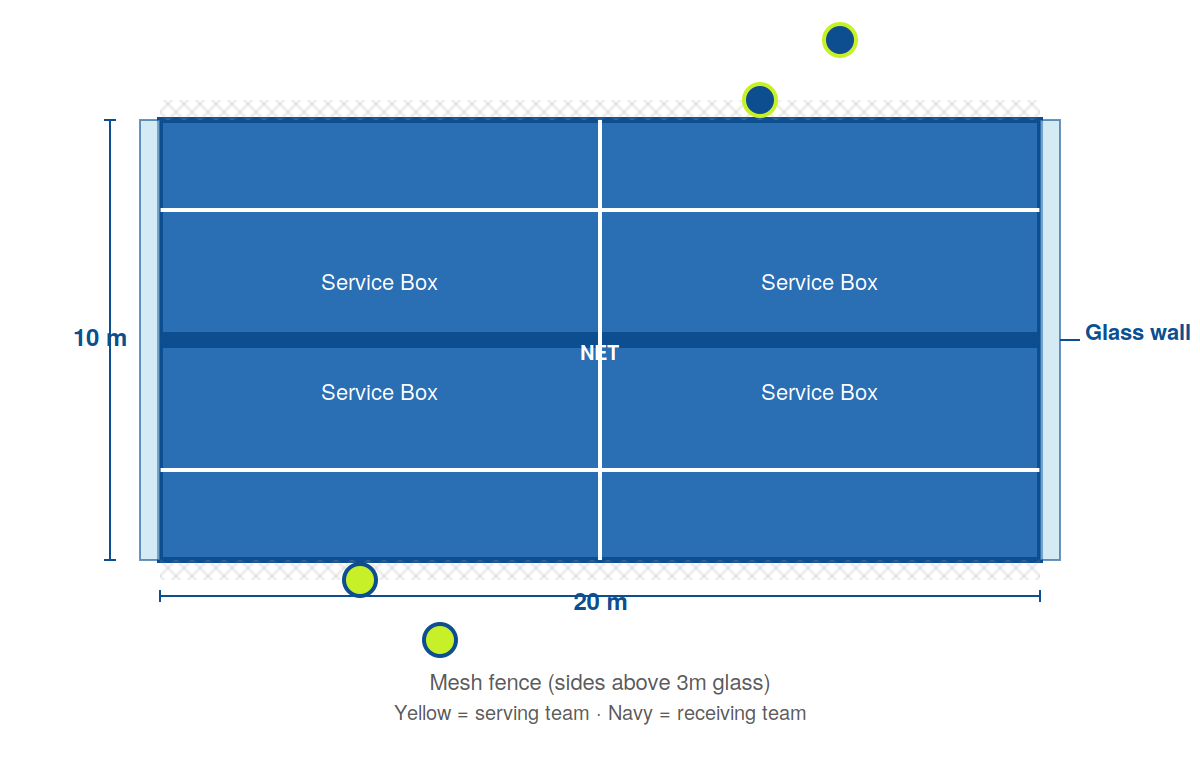 The walls are not decoration. They are part of the playing surface, and learning to use them is the whole skill of padel.
Scoring
Padel borrowed its scoring straight from tennis. Points go 15, 30, 40, game. If both teams reach 40, that is deuce, and one team needs to win two points in a row to take the game. The first point after deuce is called advantage.
A few clubs and tournaments use what is called golden point at deuce, where the next point wins the game outright instead of playing advantage. The receiving team chooses which side they want to receive from. If you are playing somewhere new, just ask before the match starts.
A set goes to the first team to win six games, with a two-game margin. At 6-6, you play a tiebreak (first to seven points, win by two). Matches are best of three sets.
Serving
The serve is where padel feels the most different from tennis. Three rules cover almost everything:
Underhand only. You drop the ball, let it bounce once, and hit it with your paddle below waist height. No overhead serves.
Diagonal. The serve has to land in the service box diagonally across from you, the same as tennis.
You get two tries. If your first serve is a fault, you get a second. Two faults in a row and the point goes to the other team.
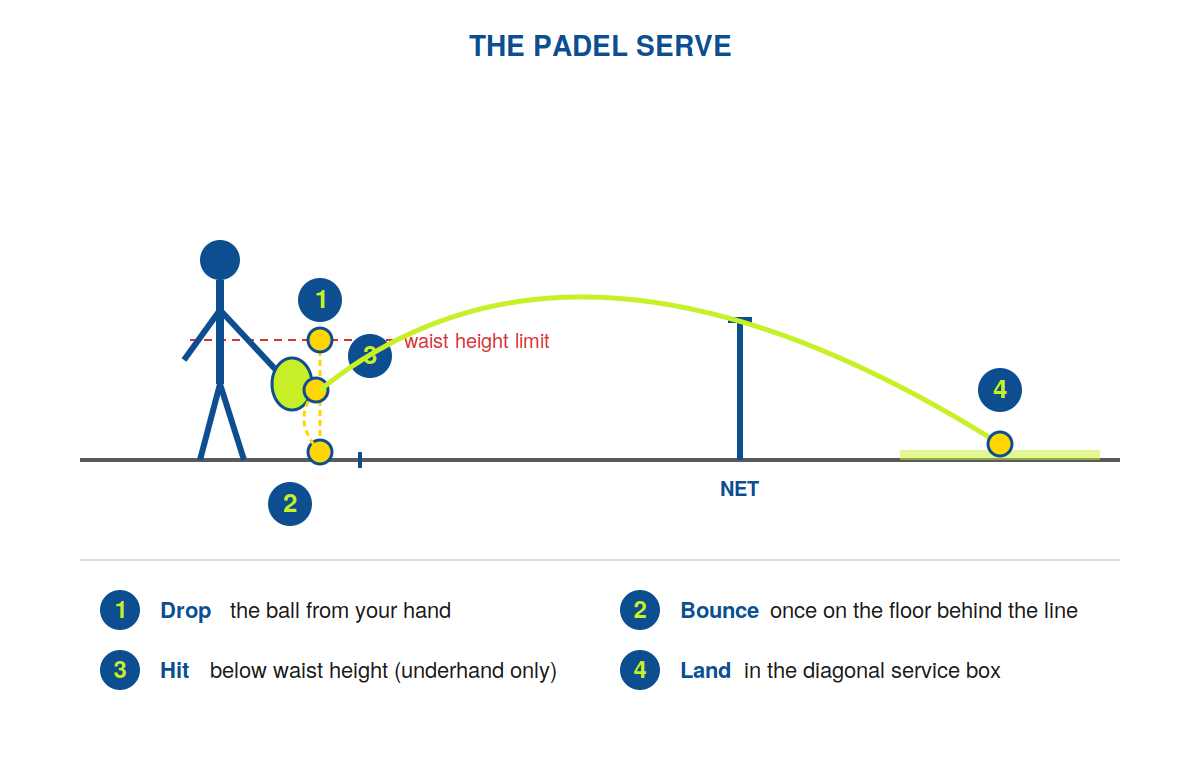 What counts as a service fault
The ball lands outside the service box.
You hit the ball above waist height.
You step on or over the service line before contact.
After bouncing in the service box, the ball hits the metal fence (this is a fault, not a let).
You completely miss the ball after tossing or dropping it.
One important wrinkle: if your serve bounces in the correct box and then hits the side glass before going out, that is still in play. The receiver has to deal with it.
If you play pickleball, the underhand serve rule will feel familiar, but padel does not have a kitchen or non-volley zone. You can volley from anywhere on your side of the court, including right at the net.
Playing the Ball
Once the serve is in, normal rally rules kick in. The ball has to bounce on the opposing team's floor before it touches any of their walls. After that bounce, anything goes:
You can hit the ball before it bounces (a volley).
You can let it bounce, then play it off your own back wall or side wall.
You can play it off multiple walls on your own side, as long as the ball has bounced on the floor first.
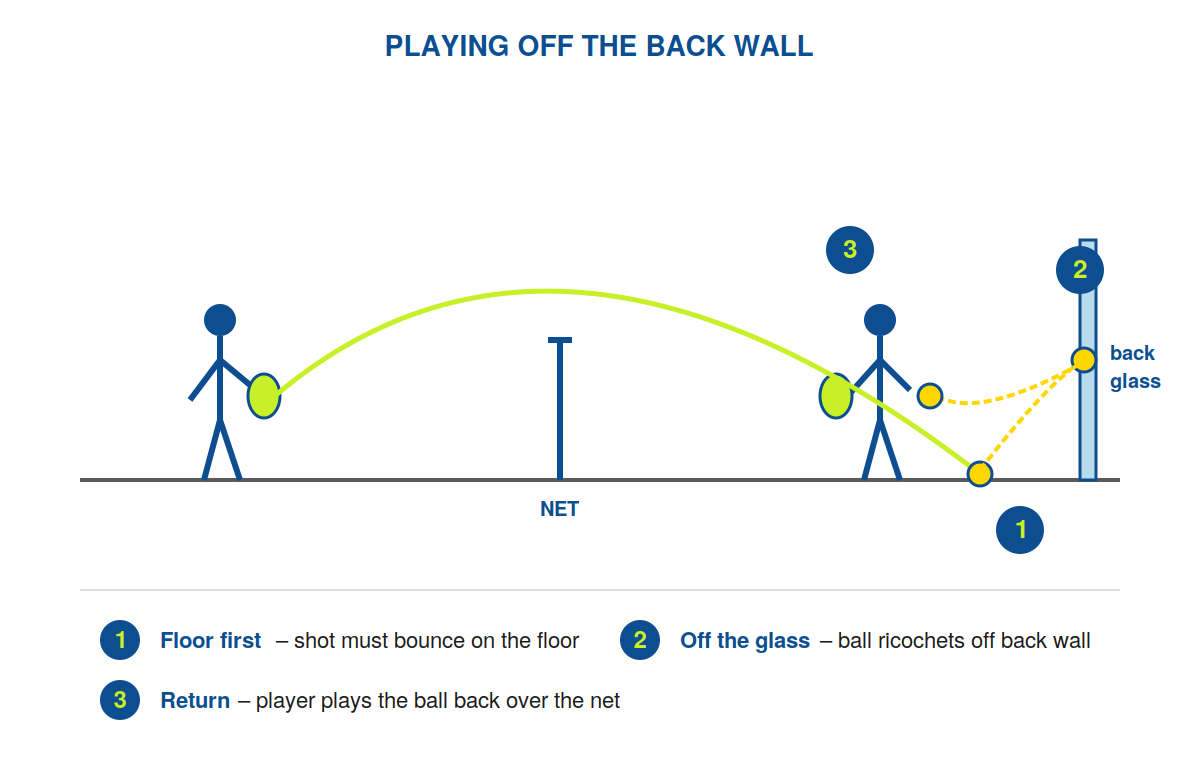 The classic padel shot is letting the ball bounce, watching it come off the back glass, and hitting it back over the net. This is why beginners get caught flat-footed at first. In tennis, a ball heading for the back fence is a winner. In padel, it might come right back to you.
What ends the point
The ball bounces twice on your side of the floor.
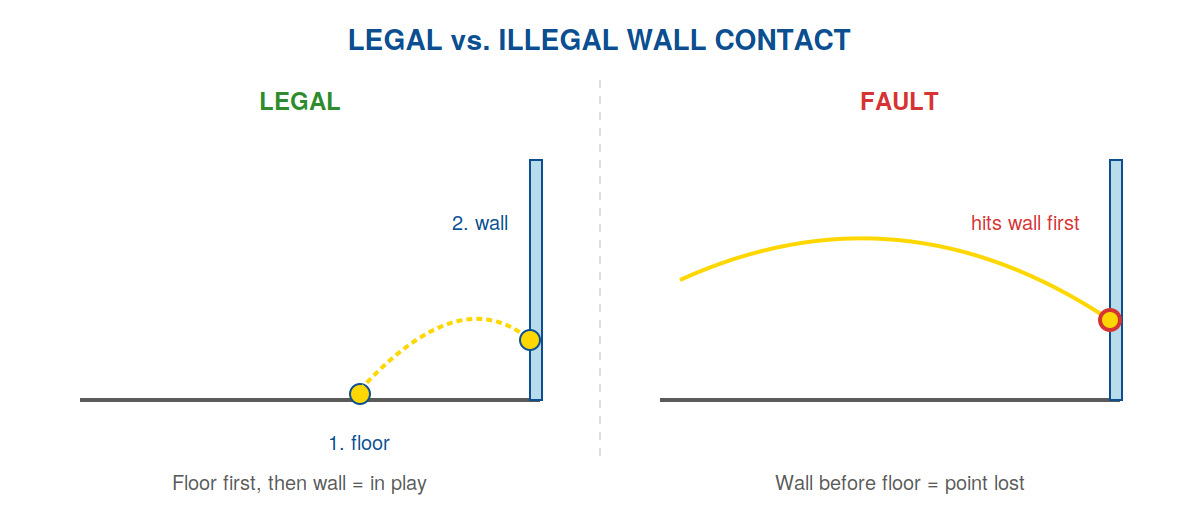
The ball hits your wall or fence before bouncing on the floor.
You hit the ball into the net, or it lands outside the court.
The ball goes over the side fence (out).
You or your paddle touches the net while the ball is in play.
You hit the ball before it crosses the net to your side.
The Wall Rules That Trip People Up
A few rules around the walls cause most of the early confusion.
Your own walls are fine. Theirs are not, on the full. You can play the ball off any wall on your side after it bounces. But if you hit a shot that touches an opponent's wall before bouncing on their floor, you lose the point.
 Metal fence is in play during rallies, just not on serve. If the ball hits the metal mesh on your side after bouncing on your floor, it is still in play and you can return it. The serve is the only time mesh contact ends the point.
The "out the gap" rule. At higher levels, players can run out of the court through the gaps at the side and return a ball from outside. This is legal, just rare. Most clubs do not have the gap configuration where this matters, and most players never need to think about it.
Equipment
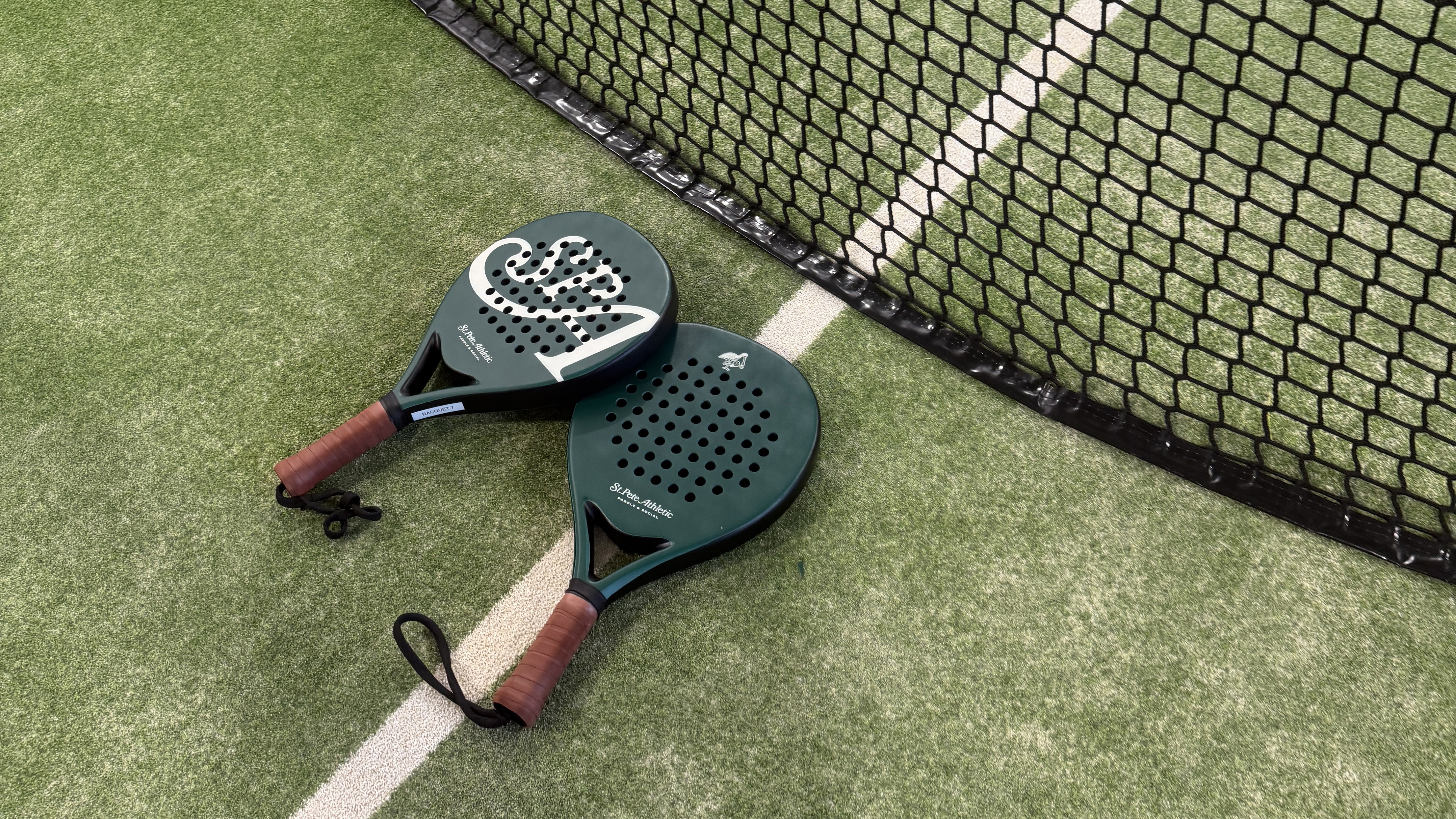
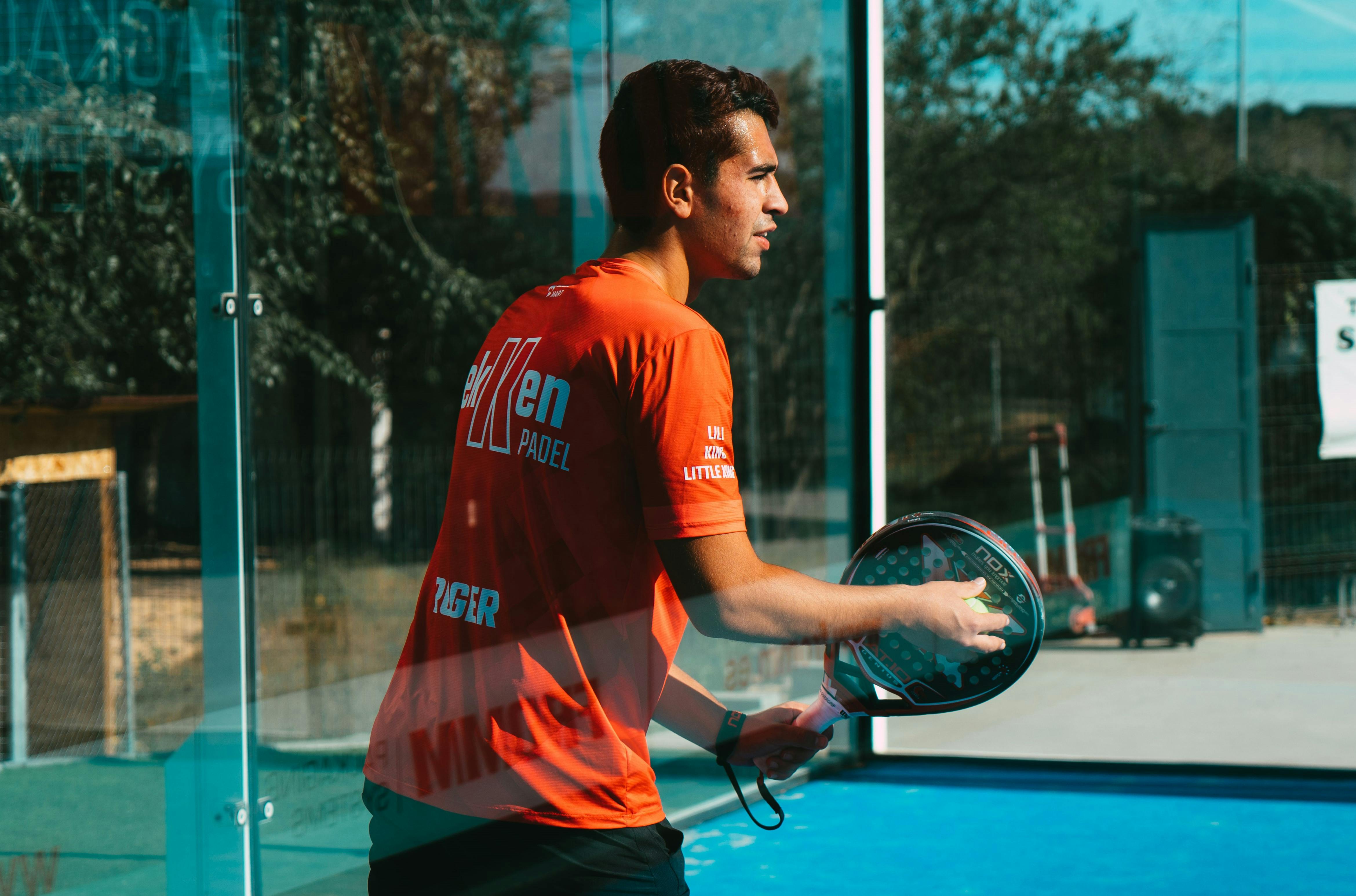
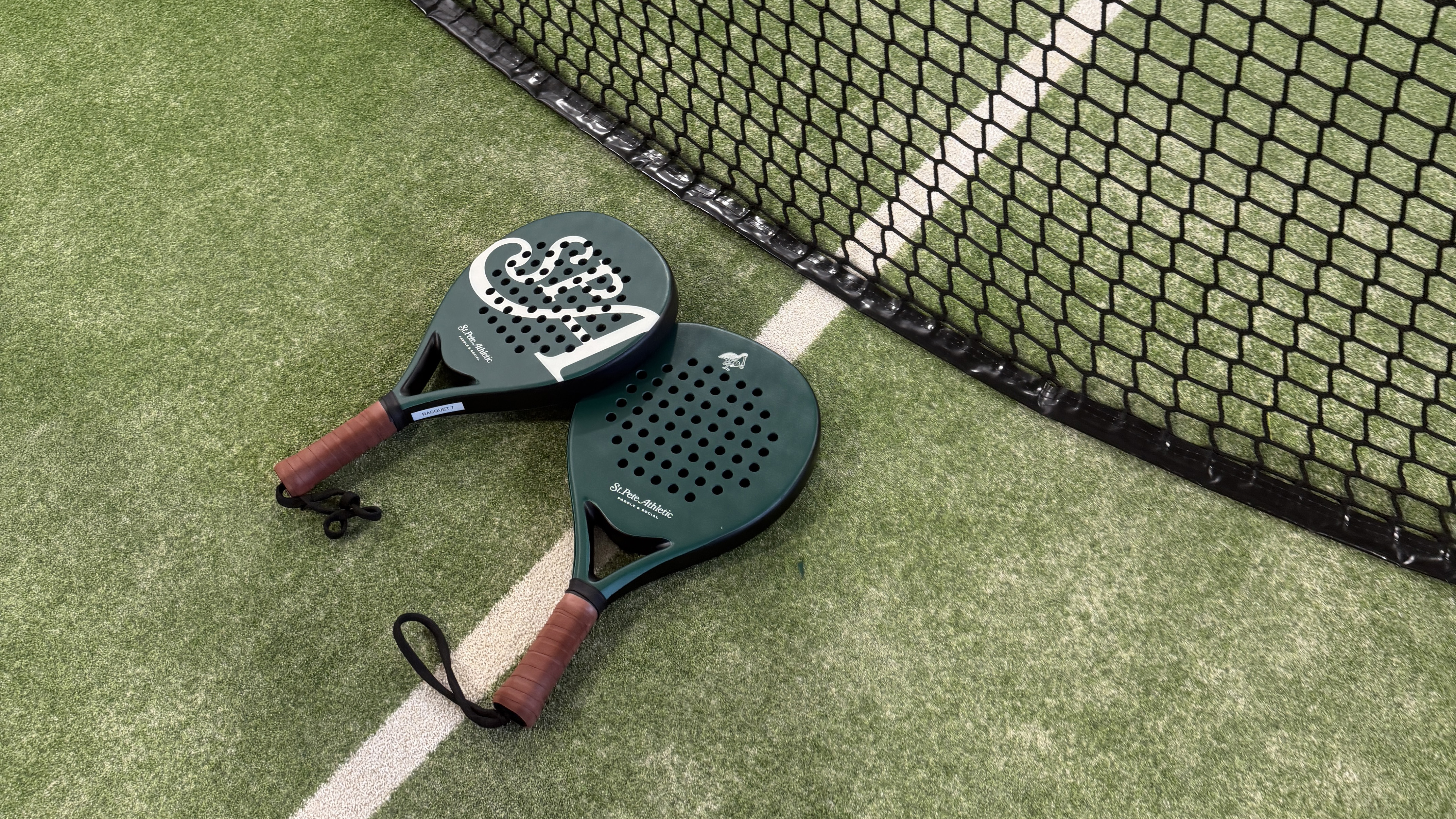
Padel uses a solid paddle with no strings. The face has holes drilled through it, and the core is usually foam (EVA or polyethylene). Paddles are shorter than tennis racquets and have a strap that loops around your wrist, which is mandatory under FIP rules.
 The ball looks like a tennis ball but has slightly lower internal pressure, which makes it bounce a little less and gives players more control off the walls. A regular tennis ball will technically work but feels too lively. Most clubs supply approved balls.
Common Mistakes New Players Make
Standing too close to the back wall. Stay around the service line area at first. You need room to let the ball come off the glass.
Trying to hit winners off the back wall. Use the wall to keep the ball in play and reset the point. Power shots are for the net.
Smashing every overhead. A good smash bounces high off your opponent's back glass and sails over the fence. Aim for that, not just hitting it hard.
Forgetting the serve has to bounce first. It is muscle memory from tennis. Drop, bounce, then hit.
Not communicating with your partner. Padel is a doubles game. Call balls, talk between points, and decide who covers what.
One More Thing About Format
If you are playing socially, most clubs run 60 or 90 minute open play sessions where you rotate partners and play short sets. In a tournament or league, expect the full best-of-three format. Pickup sessions in the US often play to first-to-six games with no ad scoring just to keep the rotation moving.
If you run a padel facility, host corporate events, or are planning a tournament, custom UV-printed padel rackets work as branded giveaways, member welcome kits, or tournament prizes. We print at our shop in St. Petersburg, FL and ship across the US. Reach out at sales@brandedpickleball.com or call 813-658-8127 to talk through what you need.